
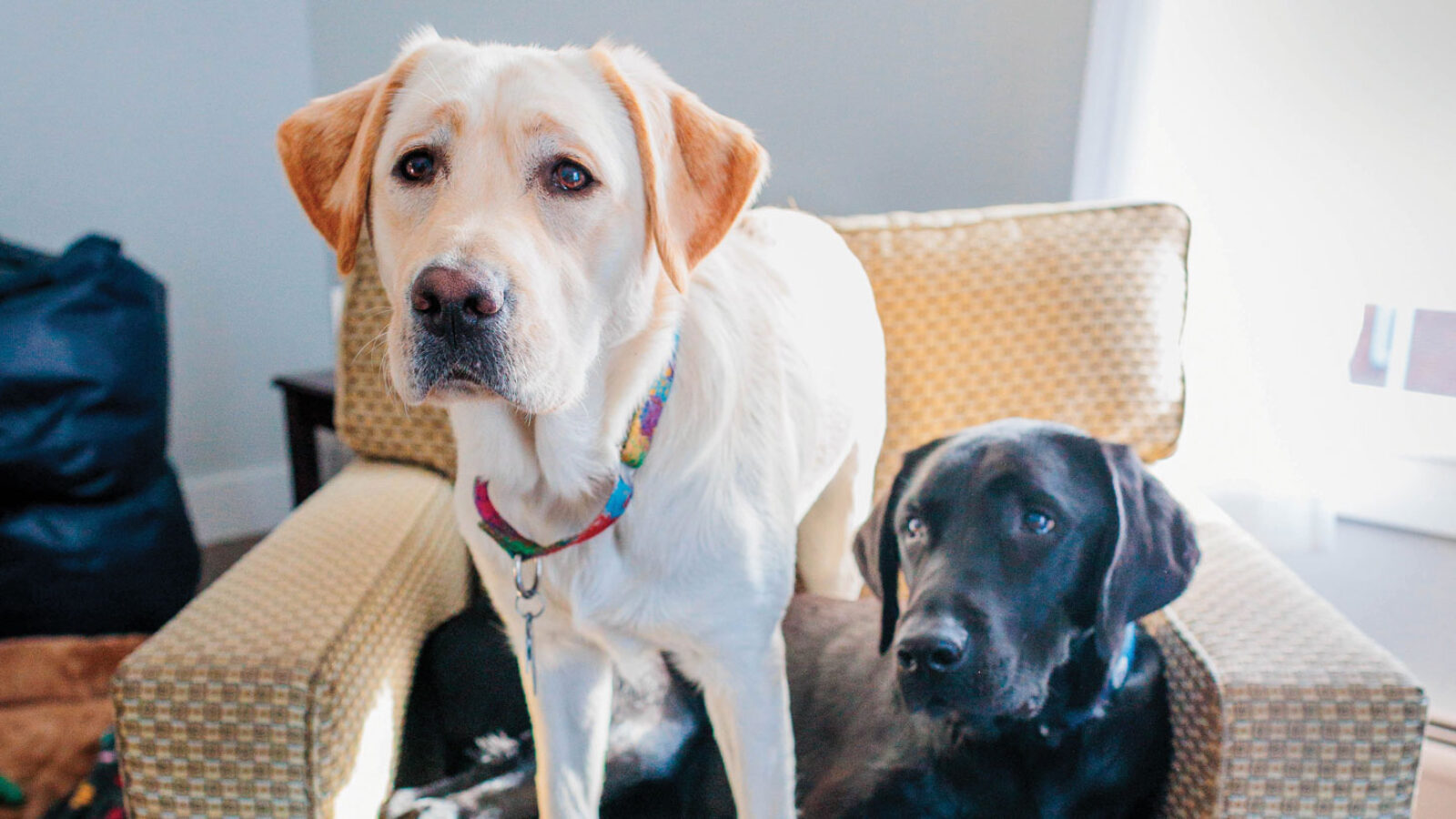
Meet Henry and Scout: The Newest (and Fuzziest) Members of Health & Wellness
Last May, the Health & Wellness Office at Williston was an entirely human-staffed operation. By October, the team had expanded by two new canine team members, both eager to lend a paw in supporting students.
Henry, a 2-year-old black lab, and Scout, a 1-year-old yellow lab, are the two newest, fuzziest, and most energetic members of the Health & Wellness staff. The two did not arrive at the same time, but do have history with each other—making them an especially interesting tag-team duo.
Director of Mental Health Counseling Meg Colenback was introduced to Henry first, through the Puppies Behind Bars program. The program operates out of multiple correctional facilities—the dogs’ program was at the Fishkill Correctional Facility in New York state—and typically inmates (otherwise known as “trainers”) train dogs to work as service dogs, or to work for fire departments, police departments, and other first responders. Williston is one of the first private schools to receive dogs trained by Puppies Behind Bars for therapy work.
In his first two months, Henry made a noticeable difference. But Colenback noticed that at times he seemed overwhelmed in big groups. Trained to be a service dog, Henry worked best in one-on-one situations, or with Colenback directly by his side. “He’s just kind of a quiet guy,” she notes.
Enter Scout, one of Henry’s classmates at Puppies Behind Bars, and a more extroverted, crowd-loving dog. Originally, Colenback thought that Henry might be reassigned through the program, and Scout would take his place. Instead, Puppies Behind Bars and the school reached an agreement to let Williston keep both dogs and use them in tandem for Health & Wellness. It has paid off—for the school, and for Henry. “As I tell the students,” says Colenback, “Sometimes a good friend can really help.”
Henry and Scout are now a wellness duo, with Colenback as the pack leader. She can issue dozens of commands to the dogs—including bow, high-five, and salute. They go out with her on campus, too, including to dorms for visits or workshops, or as unofficial mascots at school events. “The presence of a dog really lifts people’s spirits,” she says. “My hope is students who wouldn’t necessarily make a connection with me, might make a connection with Henry, and that can build a bridge for students to talk about something going on with them.”