
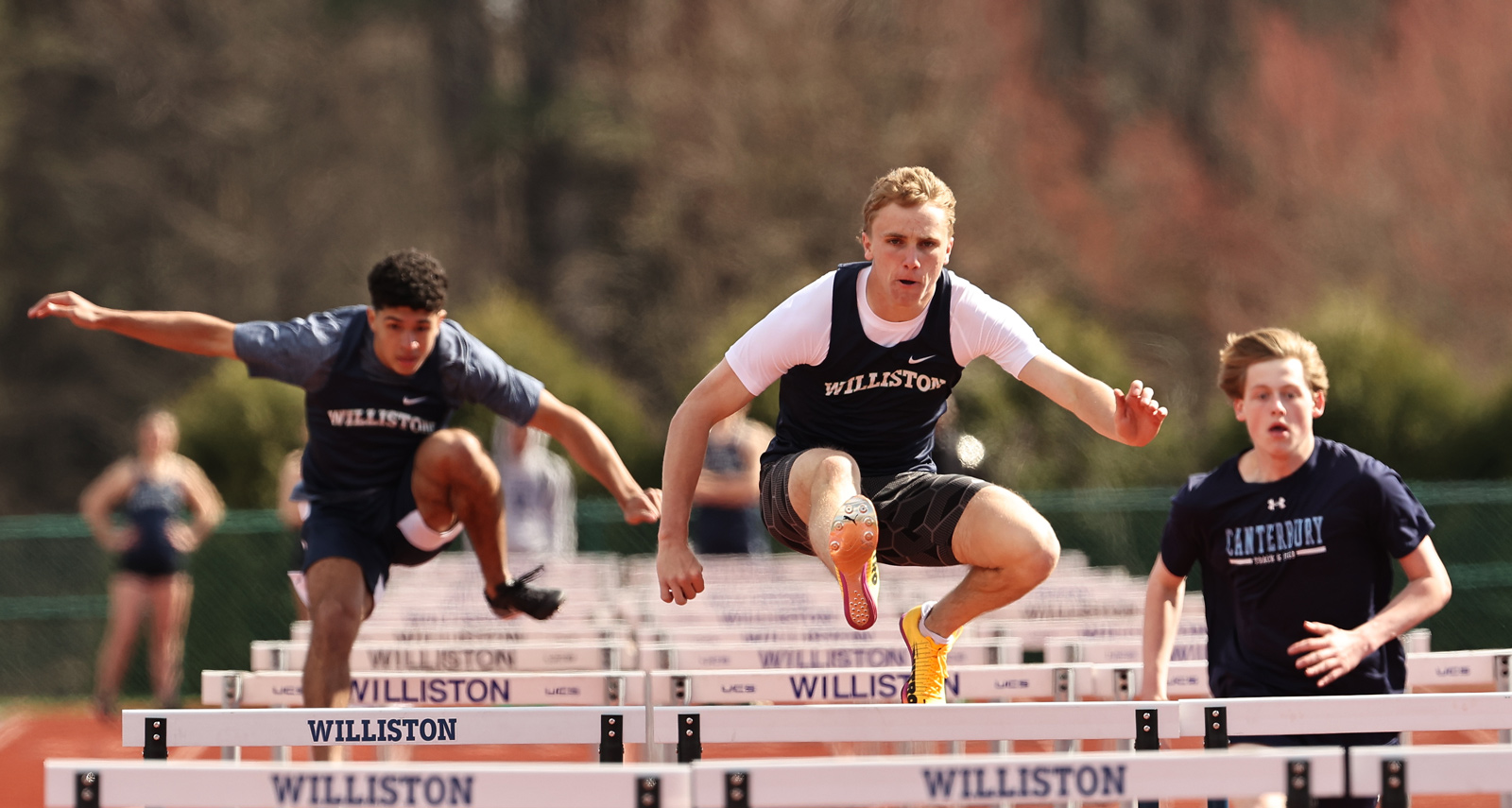
Track & Field is a sport of numbers. 100, 200, 400, 800, 4×100, 4×400, 1,500, 3,000. Exact, specific numbers, numbers Williston’s track athletes have reached and numbers they’re striving for. It’s not surprising, then, that everyone on this year’s team can express their goals, the times they’re looking to beat in the 100-meter sprint or the 1,500-meter race, the distances they’re hoping to throw in the shot put, the height they want reach in the high jump, the length they want to long jump, down to the exact second, the exact inch. It’s the thrill that comes with creating a new number for themselves that motivates them.
Take Dean Ruksnaitis, a senior thrower, whose specialty is discus. His personal record is 105 feet, but this year his goal is 125.
At first glance it might seem, given the relative size of Williston’s throwers, that the biggest would be the best, the throwers with the strongest arms, but Ruksnaitis says it’s more than just brute strength.
“There’s a lot more technique than people think,” he said. To that end, he and fellow senior Chris Oswitt, the team’s main shot put contender, have taken it upon themselves to serve as mentors to the younger and newer members of the squad, like Max Kellog ’27 and Kyle Seltzer ’27, both of whom play basketball as their main sport but are giving the throwing events a try for the first time.
Or take Kamal Sergeev, a junior from Kazan, Russia, who has his sights set at coming in sub-4:25 in the 1,500-meter race. It would be a 23-second improvement from his current 4:48 personal record, which he set at last year’s meet at St. Paul’s.
But Sergeev is determined, and he’s got the focus to back up his aspirations.
This summer, while attending a seven-week, pre-college program at Harvard, Sergeev tallied nearly 400 training miles. Sergeev, along with teammate Brody Richardson ’26, also runs the 800 and the 3,000-meter races. Richardson, who will race next year for Union College, has his own specific numbers: he’s hoping to go under 1:55 in the 800 and 3:55 in the 1,500, while also aiming to shave 29 seconds off his current personal best of 9:04 in the 3,000. He noted that the 1,500 record is the “only school distance record I don’t have.”
Richardson said he and the team are off to a solid start in terms of training.
“It’s been hard work for sure,” he said. “I’m being pushed as hard as I possibly could be.”
The team got a better grasp of where they stand, what to work on, and how hard they can push goals after their first meet of the season, an April 11 quad meet against Berkshire, Canterbury, and Miss Hall’s.
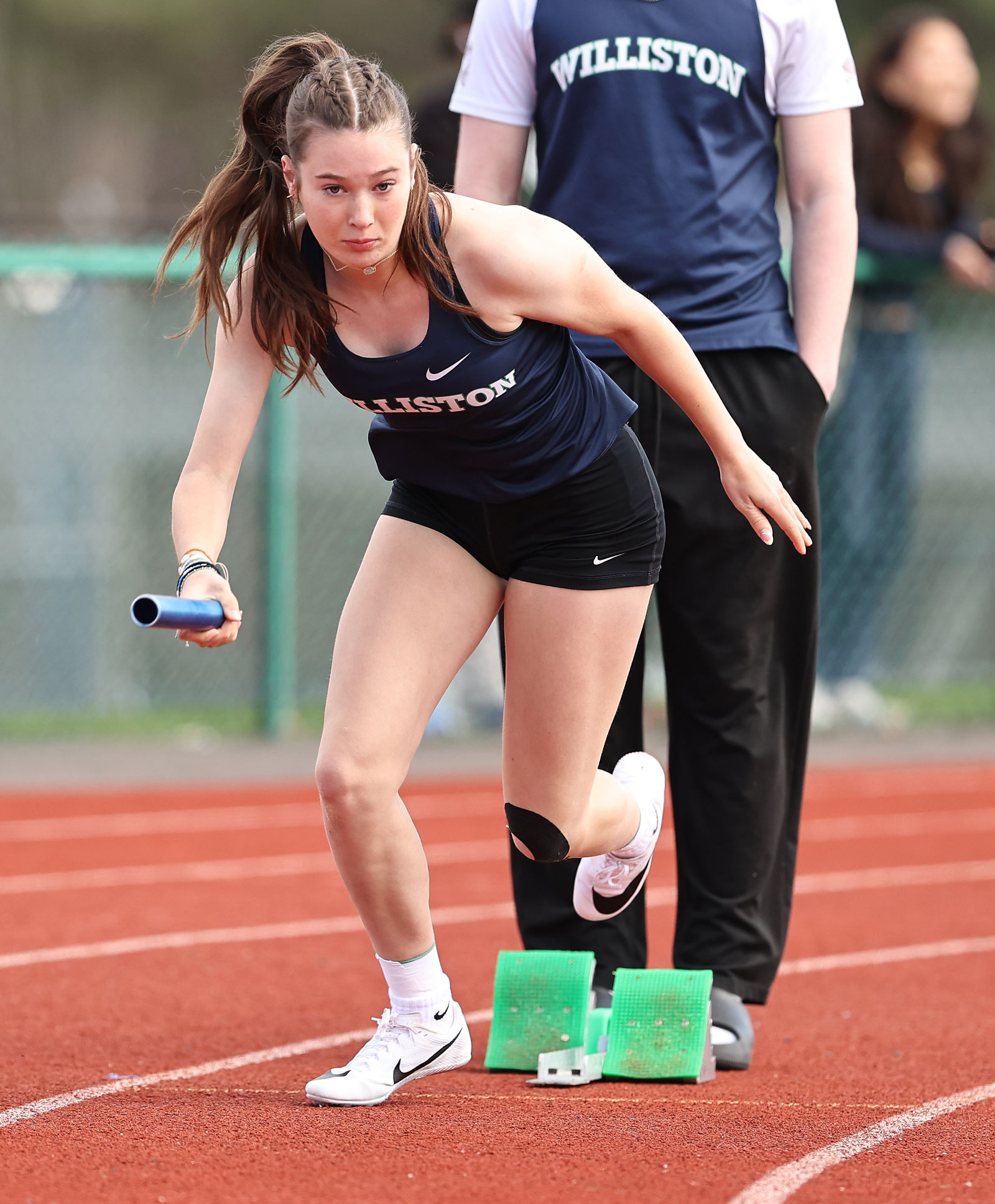
Not everyone is as seasoned as these athletes, but that doesn’t mean the new runners and jumpers don’t have their own aspirations as well. Take Campbell Schulze, a seventh grader that is new to Williston and the team. I talked to Schulze as they warmed up with leg speed drills next to junior Jayla Peets Butterfield, a member of the team’s 4×100-meter team.
Schulze plans to try out the 100 and 200-meter races, and said of the season so far, “it’s been going pretty well. I’m already used to it.”
“You’re adapting,” cheered Peets Butterfield as they stretched together.
Unlike many of her teammates I spoke to, Peets Butterfield didn’t produce a list of numbers, but said instead that this year she’s focusing on winning, of course, but also doing events that interest her, like long jump, in which she’s never competed.
Senior captain Daryn Fox had a similar take. She’s also a member, with Peets Butterfield, of the 4×100 team as well as a 100 and 200-meter competitor. But her sights, right now, are set on “talking to more people and helping the new people out.”
New Head Coach Mike Mailloux is confident his athletes will hit the numbers they’ve set for themselves and is happy with the work they’ve already put in towards those individual and team goals. Mailloux’s coaching staff includes Julia Farnham with the long jumpers; PJ Andrews with the throwers; Taylor Russ with distance runners; Jessi Johnson with hurdlers; Christopher Greenfield with pole vaulters and high jumpers; and Joe Manley with sprinters.
Mailloux said he’s witnessed his runners, jumpers, and throwers working hard, but what he’s been most pleased to see is something that can’t be quantified.
“I love the buy-in and enthusiasm from the younger teammates,” he said, which in only three weeks of practice he has clearly noticed. “That’s the lifeblood of the team.”