
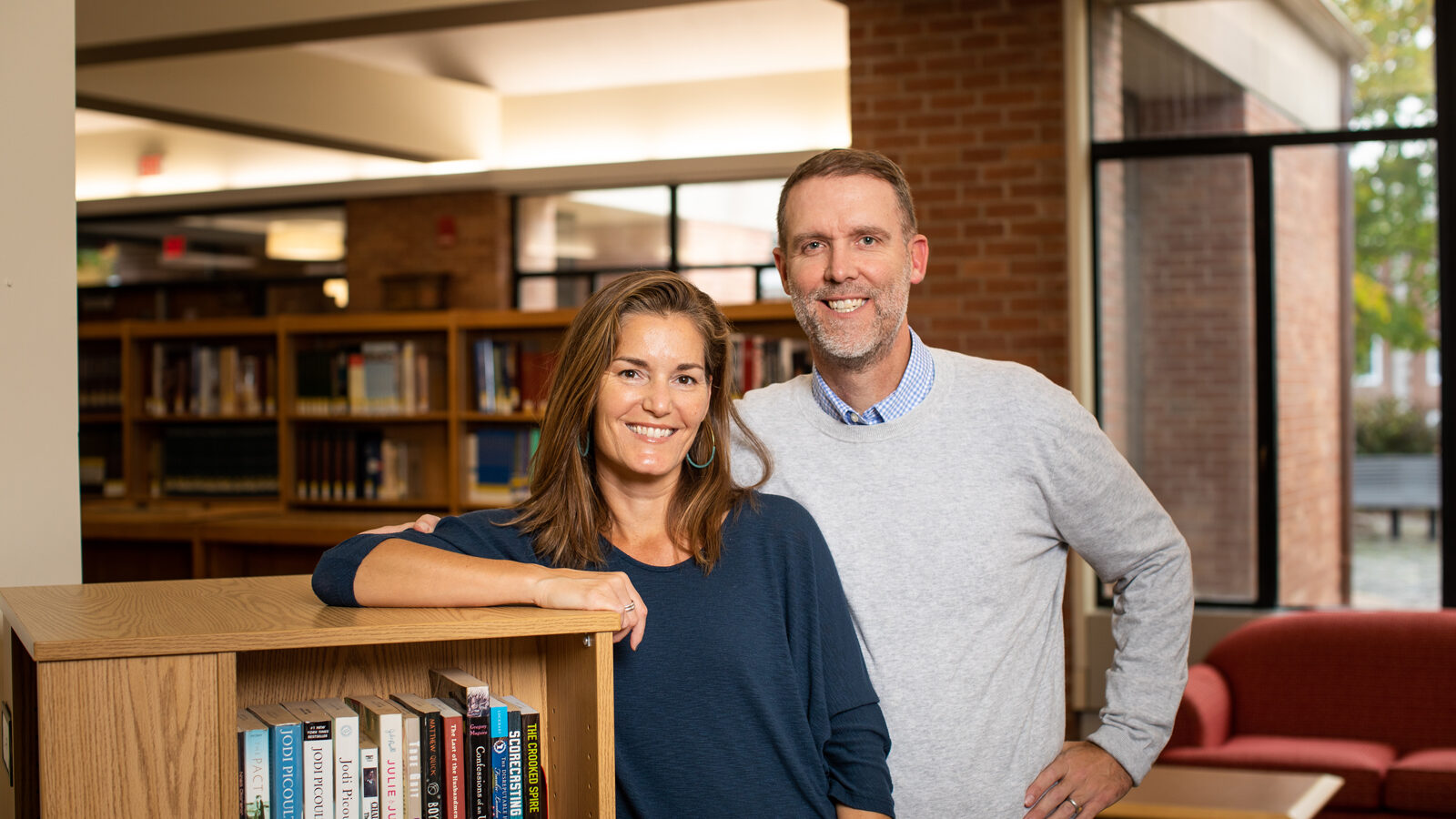
Every sport is a numbers game. Or, at least, that’s one way of looking at it. And from that perspective, Matt and Sarah Sawyer have racked up a lot of numbers.
There are, to start, the 30 seasons Matt led the varsity baseball team, starting in his first year on campus in 1995. Add to that the two-plus decades he also coached football in the fall and basketball in the winter, and he has logged innumerable hours on Williston’s courts and fields.
Now add Sarah’s stats since she joined the faculty in 2000, which include tenures coaching thirds lacrosse, JV lax, and the past four years as assistant varsity field hockey coach, and the numbers become nearly overwhelming. The players they’ve coached, the hours they’ve driven, the wins, the losses, the speeches, the team photos—try spotting the times a Sawyer appears in a team picture in the Sabina Cain Family Athletic Center downstairs hallway—the celebrations and banquets, and bonding trips, and laps, and late nights and early mornings. That’s 58 combined years—and counting—of giving themselves over to shaping Williston’s students and athletes every season, every year. But sports are not simply a numbers game, and the Sawyers’ contributions go so much further than a statistician could measure.
Sarah credits her 26 years involved in Wildcats athletics as giving her a privileged insight into the same students she ends up teaching in English class. “I’m interested in the different ways you can get to know a kid on an athletic field,” she explains. “For many of our kids, it’s a place where they can try and fail repeatedly. What they’re trying to do is difficult and can’t be cheated; It’s only effort and skill.”
Sarah draws inspiration from seeing students in this way. “You get to know kids better when you see them doing something they’re excited about,” she said. “It makes it easier to teach.” In a similar way, Sarah said her years coaching have paid off in the intentional ways she designs lessons, manages her classroom, and keeps kids occupied.
Despite career wins and number of players who’ve gone on to success in college and beyond, Matt is humble about his role. “I really enjoy competition,” he said. “I enjoy seeing players work through adversity and helping them grow as people through that experience.” Like Sarah, Matt enjoys seeing “different sides of kids that you don’t see in the classroom.”
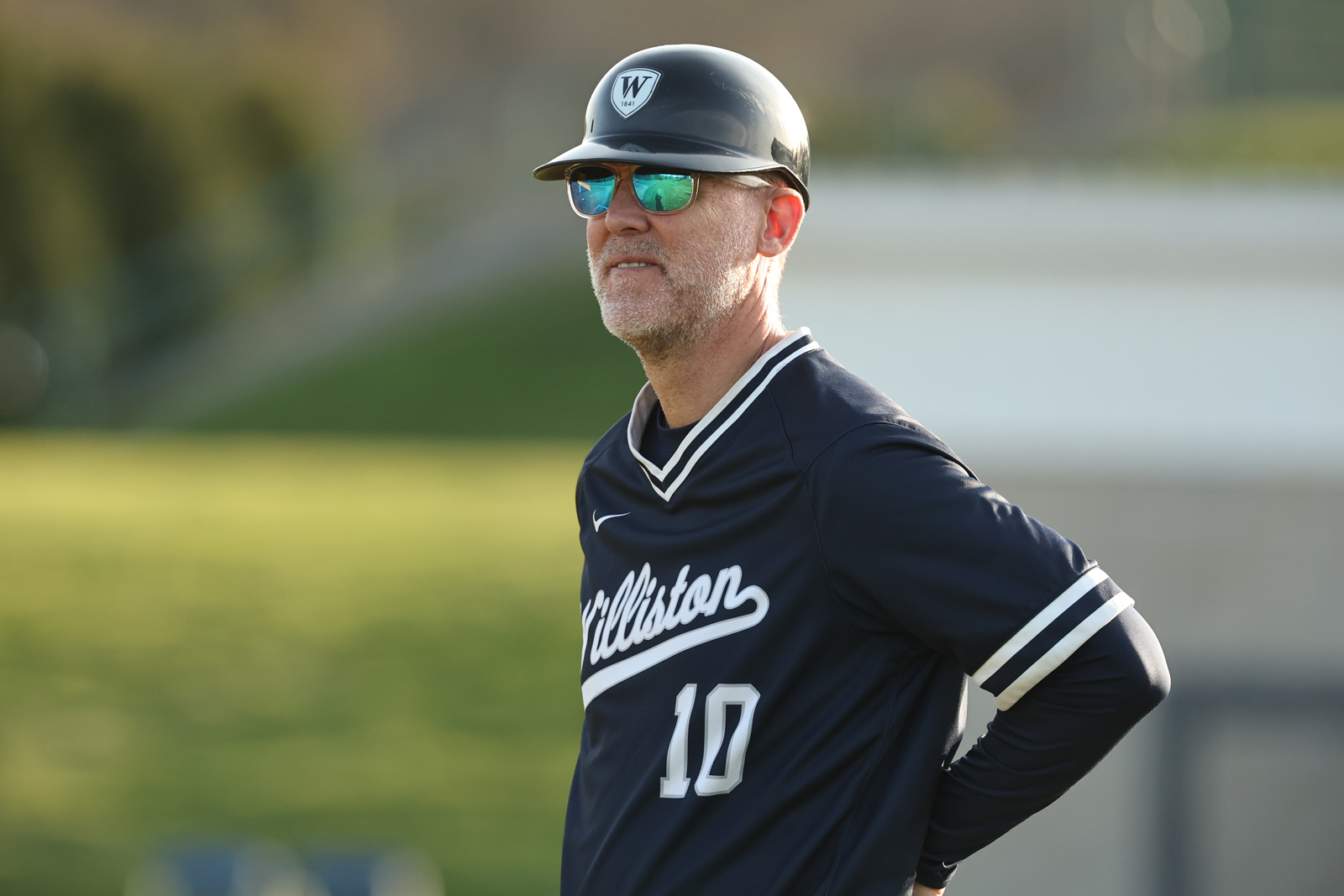
The Sawyers, both Amherst College graduates and accomplished athletes in their own rights, are characteristically low key and humble about their role in the athletic lives of Williston’s athletes, but it’s difficult to find past coaches they’ve worked alongside who shout their praises.
Mark Conroy, who served as Williston’s Athletic Director for 24 years before retiring in 2024, said he “could always count on Matt and Sarah to be role models for their peers in terms of their willingness to help out wherever they were needed in the program.” Conroy said both Sawyers, in their positivity and easygoing demeanor, exemplify what it means to be a team player, and have been “tremendous role models for the athletes lucky enough to play for them. First and foremost, they have been exceptional educators who used the medium of athletics to teach life skills that will serve their athletes well beyond their playing days.”
Of Matt Sawyer, Conroy said he “has been one of the linchpins of the Williston athletic program. I cannot speak highly enough about Matt’s contributions and leadership of baseball. He was widely respected throughout New England as an exceptional coach/educator,” Conroy continued. “Williston baseball was extremely fortunate to have Coach Sawyer at the helm for all these many years.”
This positive leadership is a theme touched on by all who’ve worked alongside the Sawyers, including Tommy Beaton, who has had Matt on his football coaching staff for the past two seasons. He also assisted Matt for seven years on the baseball diamond. “Matt always puts the kids first,” said Beaton. “He is a tireless worker and everything that he does is for the betterment of the student-athletes. The players absolutely love playing for Matt and he is truly one of the most respected coaches I have ever been around. We are so lucky to have him!”
Alex Tancrell-Fontaine has coached varsity field hockey alongside Sarah for the past four years, and gushes about her partner’s demeanor and consistency. “She’s so good at helping with the feel of the team, she’s a good balancing counterpart,” Tancrell-Fontaine says. “She keeps things settled and is helpful at creating a balance that makes it really fun.”
That fun shows up in daily on field drills (and dance parties), hikes up Mt. Tom, and trips to the local apple orchard, all of which Sarah organizes. She’s also able to take a broad view of the team’s performance and connect it to something beyond the scoreboard. “She’s able to give insight when we lose, and show how it’s more of a life lesson,” Tancrell-Fontaine said. “Kids really identify with that and remember.”
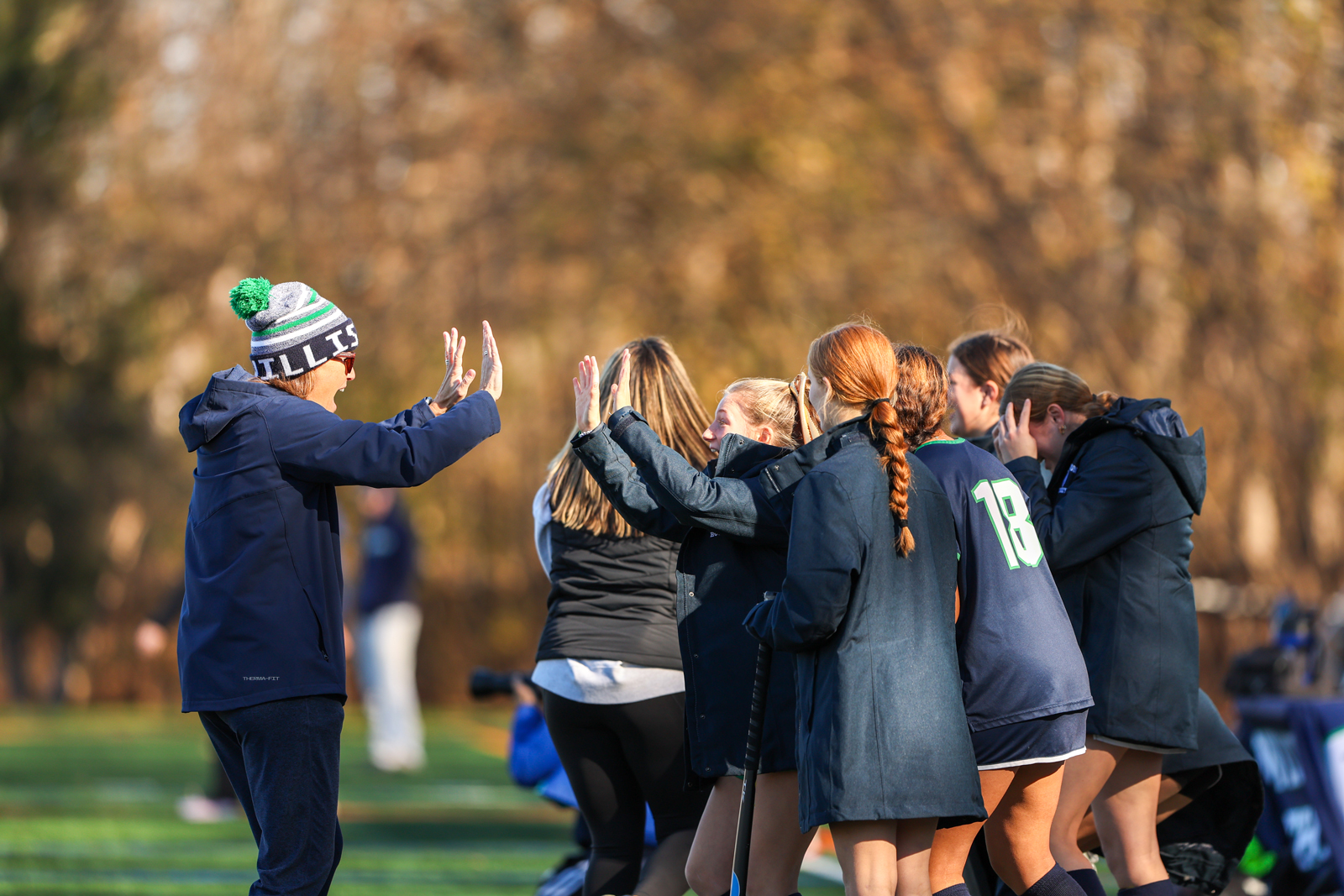 It’s a role both Sawyers have played to legions of students, as well as their own two children. Sarah coached Anna ’24, who served as varsity field hockey captain in her senior year, and Matt coached their son, Will ’22, during his tenure on the baseball team, which he also captained. In fact, he started slightly before that, coaching both Will and Anna’s Easthampton T-ball teams, and continuing as Will’s little league coach.
Matt laughed as he recalled Anna’s team. “We had Colin Larson ’24, Hudson Fulcher-Melendy ’24, and Calvin Klumpp ’24; we were amazing.”
It clearly delighted them to look back on the younger days of their now college-aged children, and the wall in Matt’s Schoolhouse office is decorated with photos of Anna, Will, and the various teams they’ve been on. (Will is now a senior on the Trinity College baseball team; Anna is a sophomore lacrosse player at Connecticut College). Sarah took a moment to praise Matt’s composure in what is often a difficult role: coaching one’s own child.
“It’s difficult for boys to be coached by their fathers,” she said. Noting that baseball is as much “psychological war” as it is physical. Sarah added: “Matt did an extraordinary job.”
As their own children grew, both Sarah and Matt said it was helpful to have the insight of both a parent and a coach in understanding the particular struggles and successes Will and Anna were experiencing. “To have a real understanding of what it’s like for kids to be student-athletes, to know the commitment it takes, to understand what could go well and what could go awry—getting to experience it as a parent was really fun,” Sarah said.
Not surprisingly, given the calm, inviting demeanor of both Matt and Sarah, it was a delight for their children, as well. “He’s pretty easygoing, he doesn’t take himself too seriously, it was easy enough to joke around with him,” said Will. “He was so down to earth with us that he made it really easy to be coached by him.” Anna agrees. “They’re so well-liked, so easy to talk to and make connections with, and that really helps them thrive as coaches,” she said. “Everyone respects them and connects with them very well.”
About her mom, who not only coached her but also taught her in English, Anna said, “She’s someone you can just go up and talk so. She’ll automatically take [players and students] in and help problem solve. People want to talk to her.”
As for special treatment, Anna and Will both agree there were no parent perks on the table. “They aren’t people who would give us special treatment because they’re teaching or coaching us,” Anna said. “We had to actually earn it.” Will jumped in, referencing the few times his dad ever seemed to get angry with him on the field. “It happened only three times,” he said, “and it was of course all my fault, all the time.”
Will said he and his former Williston teammates still share those stories “because he didn’t raise his voice, he didn’t yell. Everybody on team knew I was getting treated the same way as everyone else.” That even-keeled, honest approachability is a Sawyer trademark and has allowed them to find success on the sidelines and in the classroom.
“They’re both so honest and that makes kids trust that they’re going to be good leaders,” Will said. “They’re not trying to be somebody that they’re not. When mom’s coaching Anna, she’s the same way she is when she’s doing the crossword in the morning and having coffee. That consistency puts players at ease.”
Anna said even if her mom were having a bad day, students and players would never know, and that her job was always “to gas kids up.”
“She shows the same level of passion in teaching and coaching every day,” Anna said. “It made it so easy to be taught and coached by her, and to have her be my mom.”
Cover photo by Jo Chattman; individual photos by Risely Sports Photography