
After a pivotal moment at Williston, Richard “Cy” Allen ’65 vowed to help others—and he continues to serve six decades later
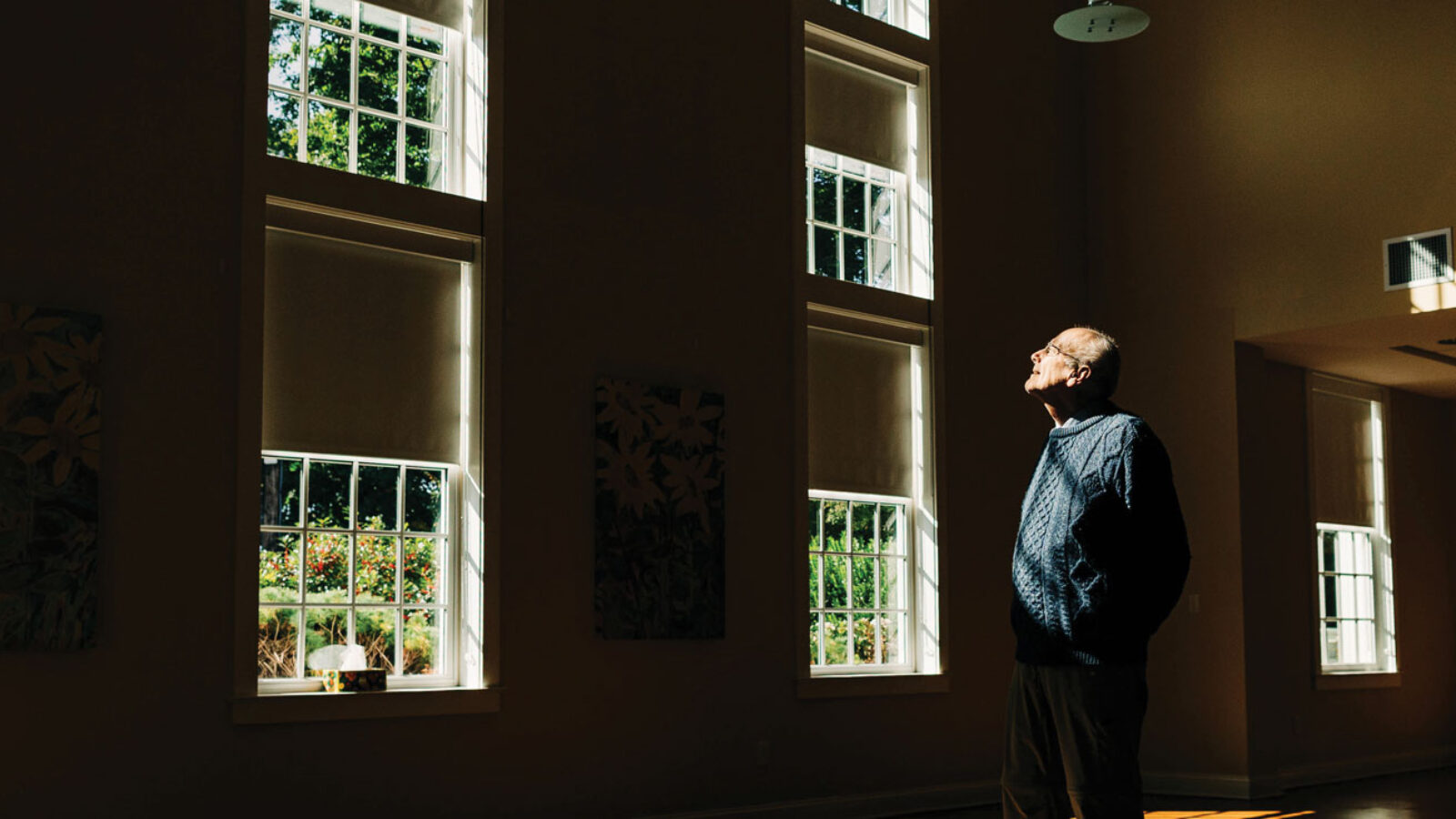
Richard “Cy” Allen ’65 still vividly recalls the November day in 1963 when he learned that President John F. Kennedy had been assassinated. A junior at Williston (or “upper middler” as they were known then), he had been walking to the cafeteria from his Memorial dorm room when a classmate relayed the news. “I was absolutely stunned,” recalls Allen, who like many of his peers revered Kennedy and the new leadership he represented. “I adored the man. I thought he was like an angel sent from heaven. When he said, ‘Ask not what your country can do for you, ask what you can do for your country,’ he had me in the palm of his hand.” There on the Quad, as the tragedy of Kennedy’s death sank in, Allen made a vow. “I looked up toward the heavens, and I said—maybe even out loud— ‘I’m going to join the Peace Corps.’ I was too young to know much about anything, but I knew that my life had been somehow inspired by President Kennedy, and I was going to honor him.”
Allen would keep his promise, serving with his wife, Andrea, in Malawi after the two graduated from Trinity University in San Antonio. His first assignment in the southeast African country was teaching tenth-grade English, a subject—Allen notes with chagrin—that he had failed at Williston. Still, his students loved Shakespeare, particularly performing in plays, and Allen noticed a change in himself as well. “I was never so alive in my life,” he recalls. Puzzled, he wrote to a minister he had befriended in Westfield, Massachusetts, where he had attended ninth grade before Williston. “I asked him, ‘What’s going on? I feel like I’ve been baptized.’” The two exchanged letters for two years. Recognizing something special in Allen, the minister sent along in his last letter an application for Andover Newton Theological School. Allen applied, and entered the seminary upon his return.
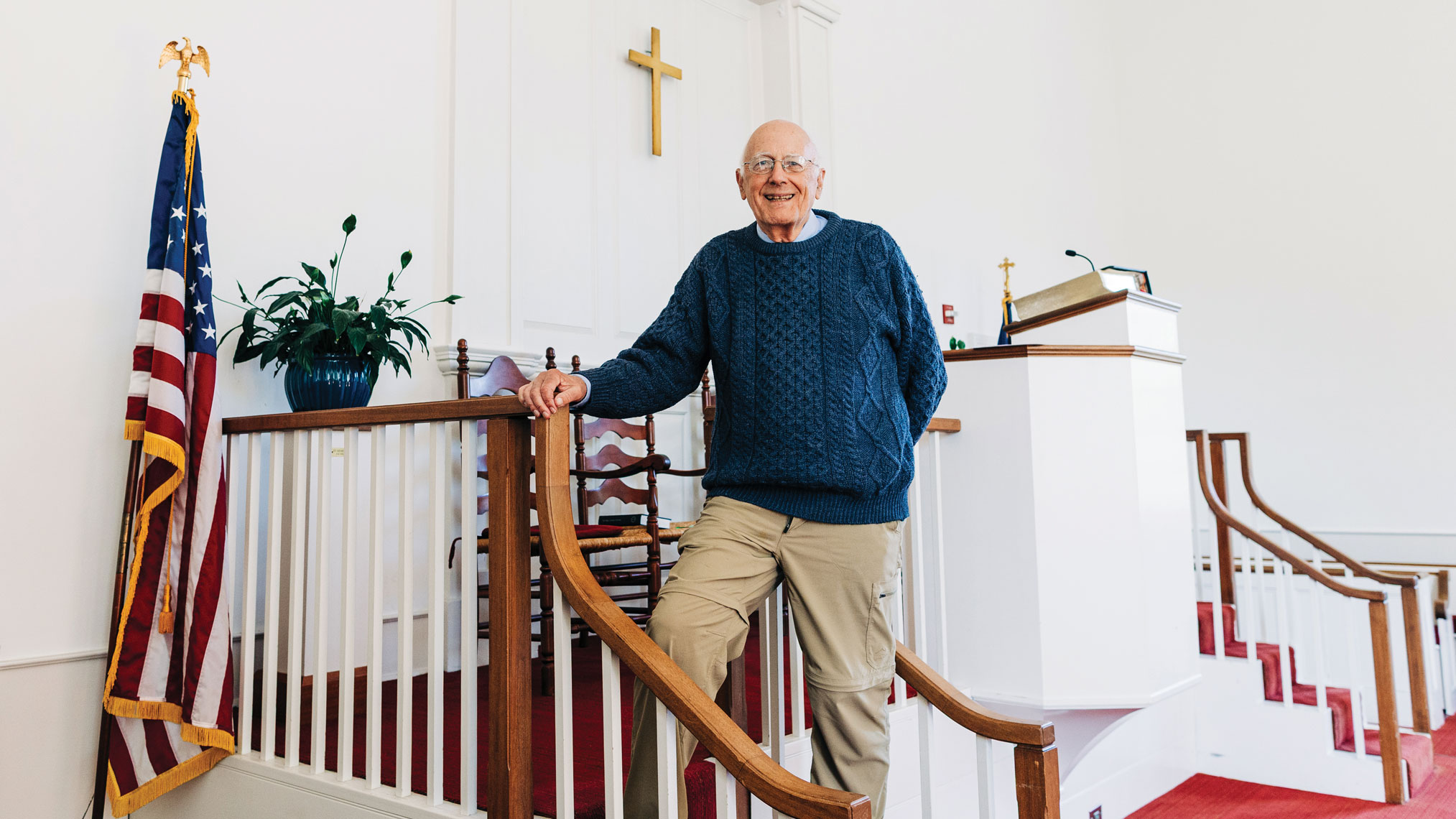
Becoming a pastor would provide a more formal platform for Allen to continue his mission of humanitarianism, now in its sixth decade. He has lived and brought assistance to places as varied as Niger, Malawi, a South Dakota Indian reservation, and communities around New England, serving most recently as pastor in South Glastonbury, Connecticut, where he had spent his early childhood. He retired as senior pastor there in 2021, but continues on as pastor emeritus, leading group trips to Africa every year.
“I love taking small groups so that they can experience that abundance has nothing to do with bank accounts,” explains Allen, who with Andrea now has four grown children and eight grandchildren. “I just feel deeply that African people and Latin American people have a lot to teach Western civilization about what life is all about.”
We asked Allen to tell us more about his service work, how he views his role as a religious leader, and what brings him a sense of purpose in life.Were you raised in a religious household?
I would say that I grew up in a spiritually alive household. My dad taught Sunday school for a year or two. I went to Sunday school. I went to church with my parents in Westfield. Religion wasn’t something that was crammed down my throat, but my parents valued it. And then at Williston, we had daily chapel, and I enjoyed daily chapel, especially when Mr. Couch, the math teacher, was doing the prayers. He would always use the prayer of St. Francis: ‘Lord, make me an instrument of thy peace. Where there is hatred, let me sow love.’ And that just landed in me.
Your experience in the Peace Corps had a profound impact on the course of your life. Today, a number of thought leaders have proposed that young people should take part in some form of national service program as a way to build social cohesion. Do you agree?
I would recommend it for young people. I wouldn’t require it. It’s not for everybody. There are other ways to grow your character. But I’ve known a number of young adults who have gone into AmeriCorps, Teach for America, Vista, and have had really positive experiences. It enables you to discover your own authority and your identity. It forces you to make relationships, and it’s in relationships that we learn who we are.
The role of religion in society has been evolving in recent years, with some religious groups becoming far more active in cultural and political issues. What has your experience taught you about the role that religion can play in society?
I believe that churches, synagogues, and mosques have a voice that must be spoken and discussed. I think that silence, when it comes to some political issues, is sinful.
What I learned in my career is that when people know that I love them, they’ll listen to me. The one has to come before the other. Other ministers might answer differently. But I always found that if people know that I actually care about them, and love them, and have walked with them through grief or through other things, then when it comes to talk about what it means to actually love your neighbor, they’ll be willing to listen to what I have to say. They may not agree with me, but they’ll listen and we can talk. Jesus was always speaking truth to the power people of his day. It got him killed, but it also created a vision of what life is meant to be. So I think that it’s always a risk to speak the truth, but if it’s spoken in love to people who know that you love them, it can make a difference.
What was it about President Kennedy that you found so appealing?
He was the first U.S. president from a Catholic background, and I was moved by his courage to follow his dream of being president and not let religious bias stand in the way. I admired that. I must say I was somewhat enamored of his Boston accent. I had respect for anyone who went to Hahvard. He was also a Cape Cod guy, and our family vacations were usually on Cape Cod. If you were a Cape Cod guy, you must be OK. And his wife was so beautiful, I saw them often as a couple, and I just thought, Wow, this guy is alive, and alive in a generous way. Not what can I gain from being president, but how can I use my time in office to bring abundance of life to the world?
Talk about your work today, and its impact.
I’ve been going to Malawi every year for many years. I go mostly because when I’m there, I am learning how to be joyful, how to be grateful. I mean, Malawi is the poorest country in the world, but when I say to a village group, Mudziwa nyembo?, meaning, “Do you know any songs?” they just start to sing and dance, and pretty soon we’re all carrying on. And in those moments, life is abundant.
We adopted an orphanage, 120 children who were orphaned by AIDS. And we have now helped 70 women move from being a sex worker to being a business operator, and thus slowing the spread of AIDS. My church every year sends about $3,000 to help those women get a loan. And then the women are accountable to each other. They meet every Wednesday, and they bring back part of their earnings so that other women can get a loan. We also help students who can’t afford to go to school. We buy computers for the lab and science chemicals. Even though I’ve been retired for four years, the church has asked me, “Can you keep doing these Malawi mission trips?” We see what a difference it makes in the people who go with me. And we see that our money is making a big difference in a part of the world that nobody knows about.
From Williston to Malawi
1963: A Vow on the Quad
As a Williston junior, Allen hears the news of President Kennedy’s assassination. Deeply moved by Kennedy’s vision of service, he makes a vow on the school’s Quad: One day he will join the Peace Corps.
Late 1960s: Into the Peace Corps
After graduating from Trinity University with his wife, Andrea, Allen keeps his promise. The couple travels to Malawi, where he finds himself transformed by the experience.
1970s–2021: A Ministry of Service
Allen enters the seminary and is ordained as a pastor. For the next five decades, he blends faith and action, serving communities in New England, South Dakota, and abroad.
Today: Missions to Malawi
Now retired as senior pastor in South Glastonbury, Connecticut, Allen continues leading annual trips to Malawi and raising funds to help orphans, women, and students there.