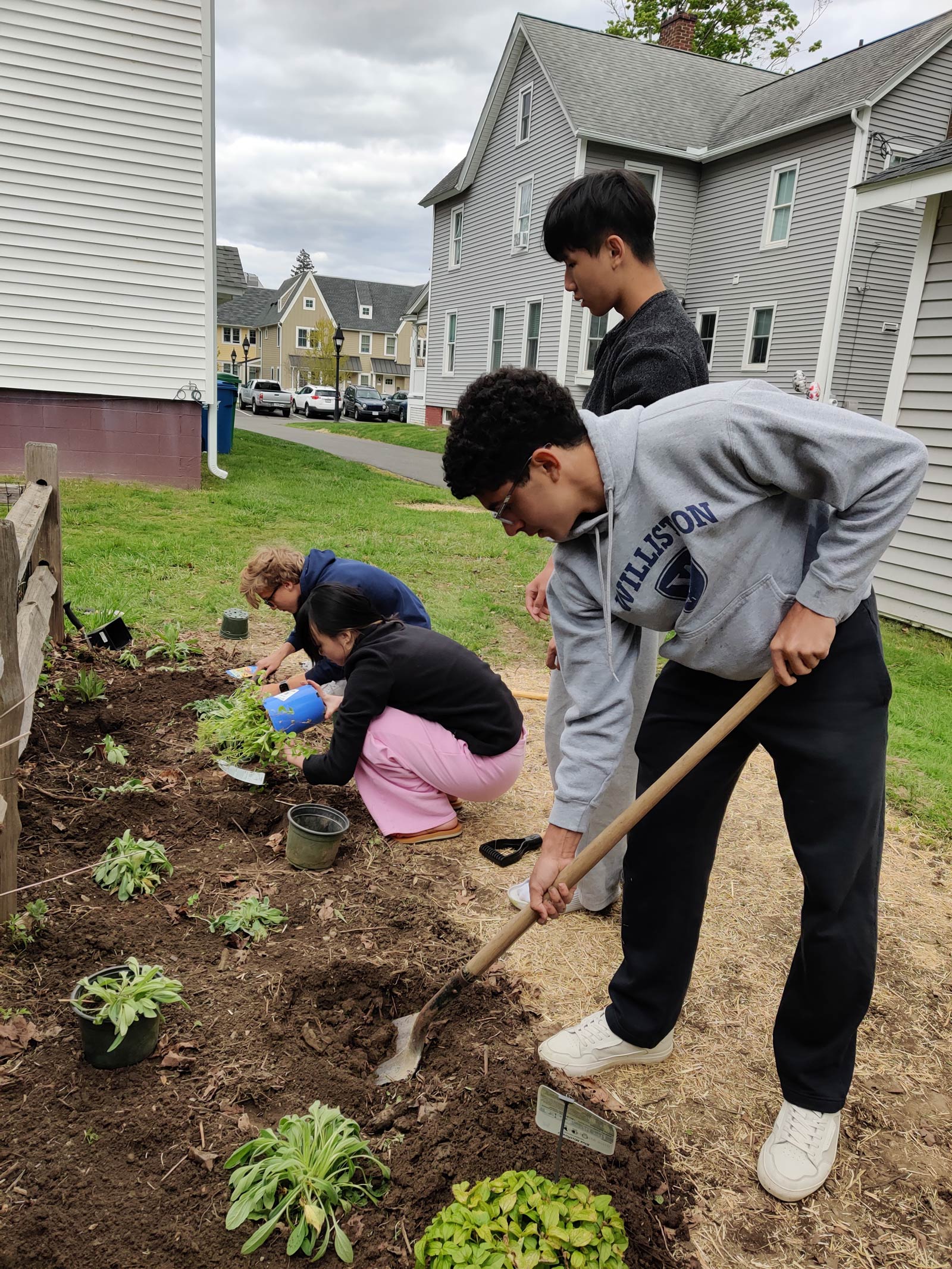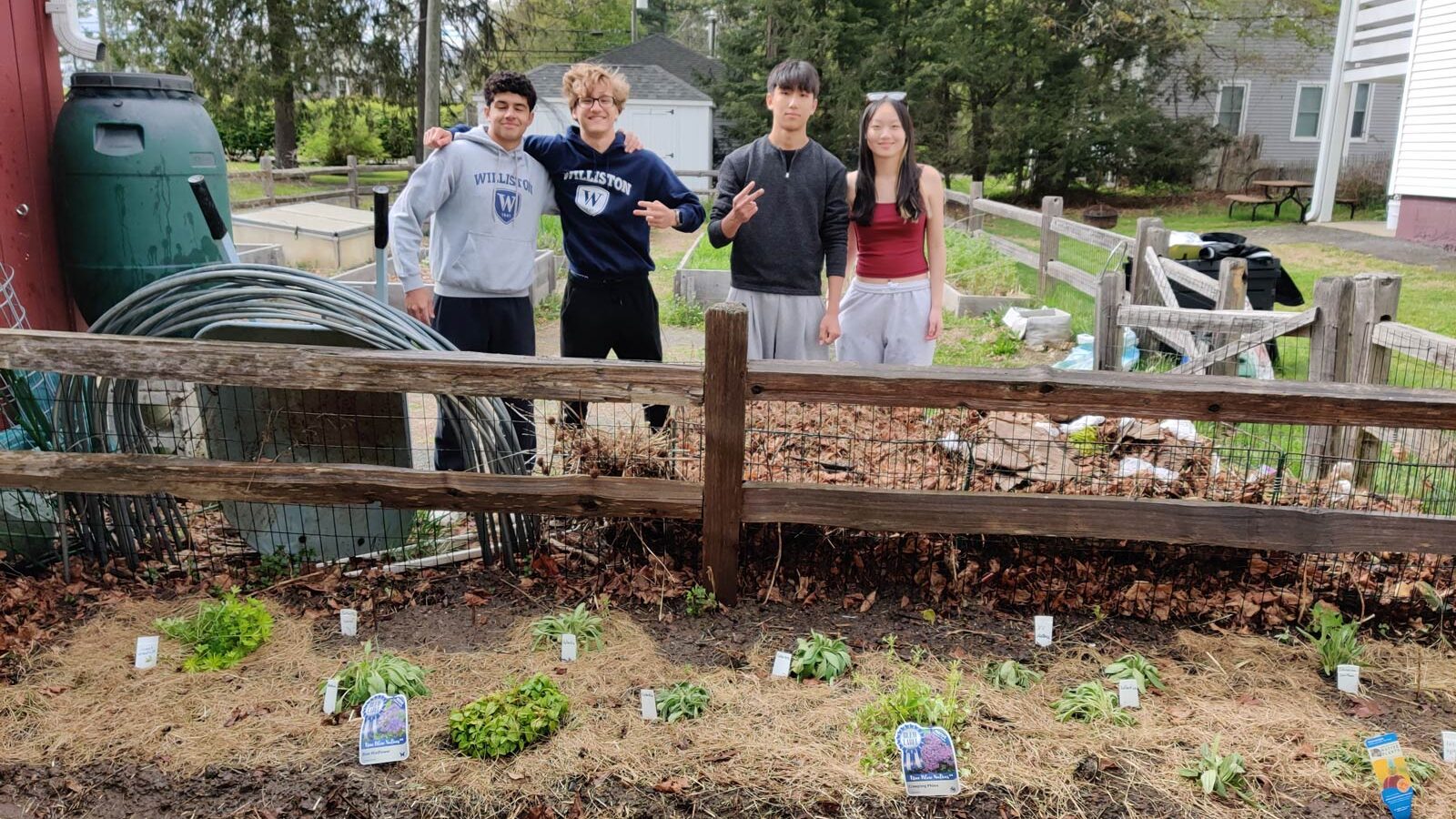
On a recent Sunday afternoon, Williston’s Gardening Club gathered at the school’s Community Garden to plant a new pollinator garden for the spring season. In the warm May sunlight, four students spent the afternoon digging, planting, watering, and learning together as they added a variety of native perennial plants that will continue blooming throughout the summer and fall. Beyond simply brightening the garden with color, these plants will create an important habitat for pollinators and other wildlife.
With support of seed donations from the Seeds of Hope table at Williston—a club that promotes the planting and nurturing of flowers, vegetables, and more—we planted butterfly weed, echinacea, rudbeckia, blue mist flower, and many other pollinator-friendly plants chosen for both their beauty and ecological importance. The garden was carefully planned to include a wide range of bloom times so that butterflies, bees, moths, and hummingbirds can continue finding food throughout the growing season.
Some of the plants each bring their own unique role to the ecosystem. Evening primrose opens its bright yellow flowers in the evening, attracting moths and nighttime pollinators before closing again during the heat of the day. Mexican hat plants tolerate hot, dry conditions while later providing seeds for birds after blooming. Creeping thyme and creeping phlox will spread into colorful ground cover, while echinacea and rudbeckia will bring taller waves of pink and golden blooms later in the summer.
As pollinators and insect populations continue declining worldwide, gardens like this become increasingly meaningful. Even small spaces filled with native plants can help support biodiversity, strengthen local ecosystems, and provide food and shelter for essential species. We hope this new garden will not only become a vibrant part of campus but also encourage more people to notice the quiet but important connections between plants, insects, birds, and the health of the environment around us.