
The garden is growing! Upper School students have been busy in April putting in cool weather crops with the hopes of harvesting a nutritious salad before they depart for the summer. Crops that have been planted include tat soi, radishes, carrots, lettuce, beets and snap peas!
Meanwhile, our Middle School students planted cover crops in several beds to nourish the soil organisms while they wait for the seedlings that favor warmer weather to grow indoors. The two main cover crops you will see in the beds are oats and field peas. If you think you see blades of grass coming up, those are actually OATS! Oats grow quickly, out-complete other weeds, and put down deep roots that work to break up compaction and harness nutrients from the depths of the beds. Field peas are mixed in with the oats. These have round leaves and curly tendrils. Peas are a valuable cover crop for their root structures, which house bacteria that can take nitrogen from the air and “fix” it in nitrogen compounds needed for plant growth. When we are ready to transplant our summer crop into these beds, we will “chop and drop” the greens, leaving the roots in the soil and the shoots become a layer of mulch on top, both breaking down over time and continuing to feed the soil microorganisms.
While annuals take time to get going in the cool of spring, perennials emerge with sturdy stems and leaves in perfect timing with the weather. Visitors to the garden will notice an abundance of chives and mint establishing themselves outside of the boxed beds. These are available for anyone who would like to transplant some in their own growing space.
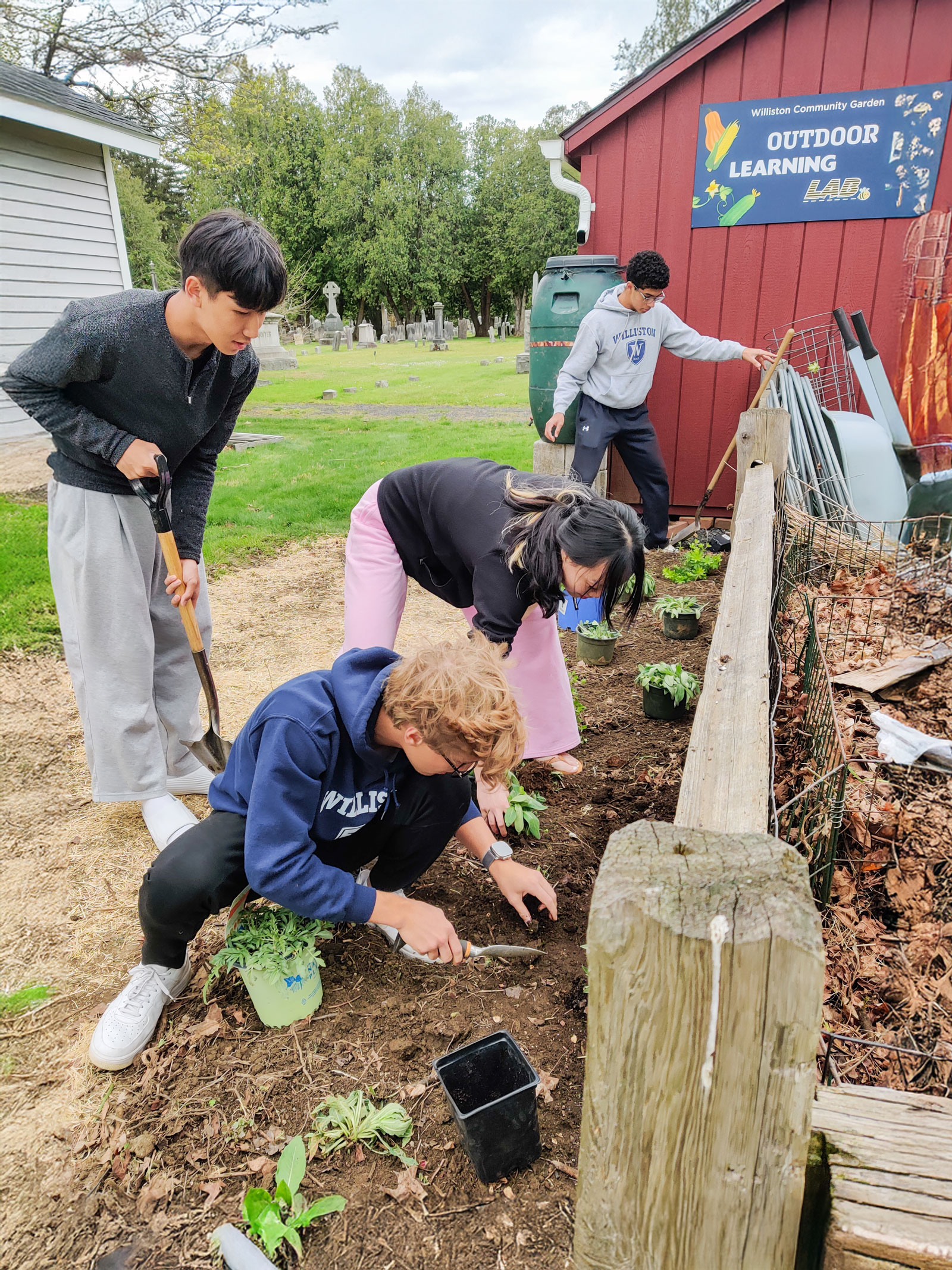
A perennial pollinator bed is being planned by the garden club. If you have any run-away perennials you are dividing this spring, the community garden could become their new home! Students are eager to support the life cycle of pollinators by planting a variety of perennials that will provide food and nectar from early spring to late autumn.