
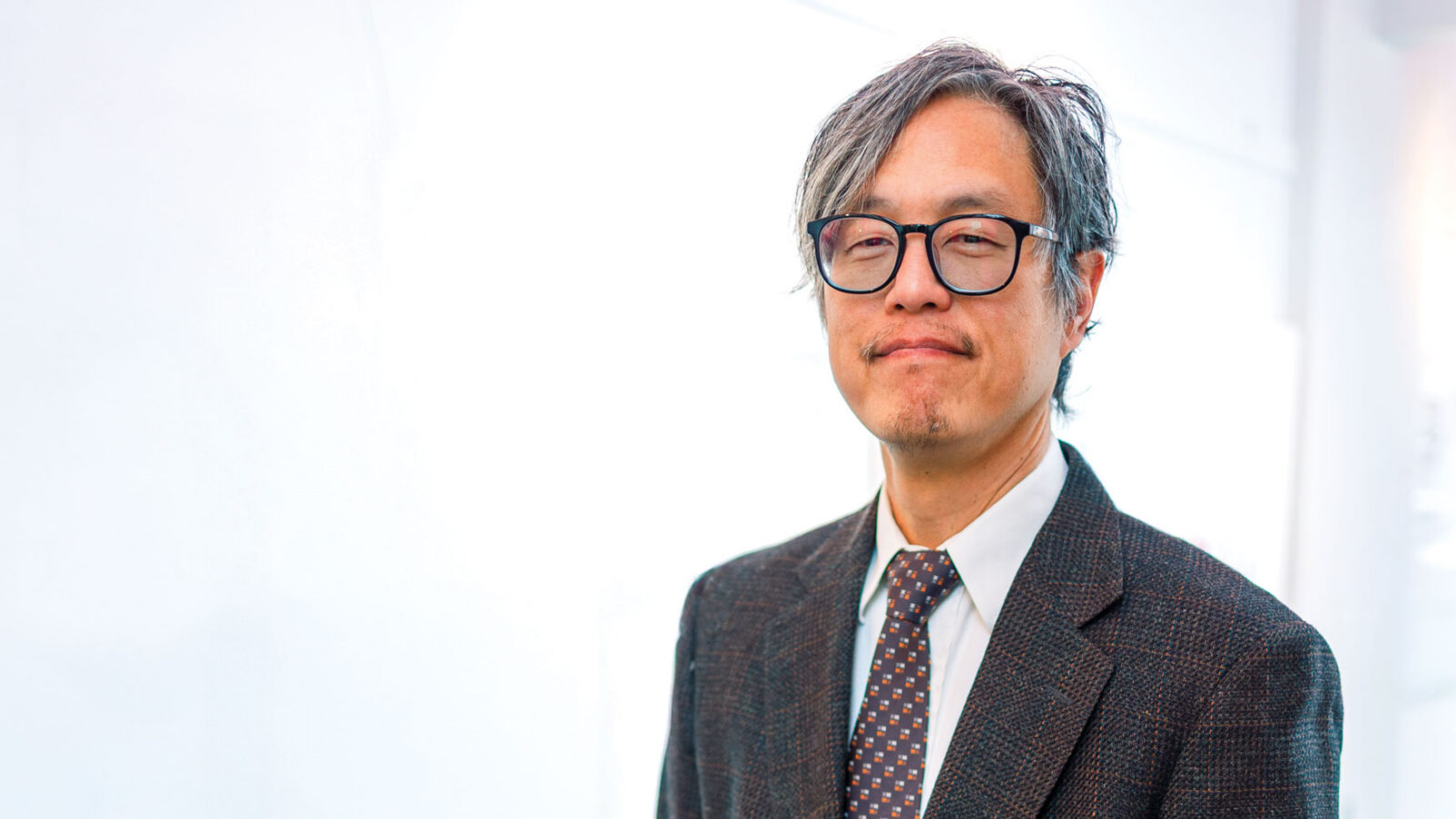
At Ken Choo’s table, Asian students find a sense of belonging
On many Sunday afternoons during the school year, a small group of students piles into a school van with teacher Ken Choo at the wheel and heads to a local Asian food market or grocery store. After shopping, they return to Choo’s house on Brewster Avenue and begin cooking together. Soon the house fills with familiar sounds and smells—family recipes from home, music in different languages, and conversations in Korean, Japanese, Mandarin, or Vietnamese.
For students who have traveled thousands of miles to attend Williston Northampton School, it can feel like something rare: a place where they can relax with other students who share their culture. “Students need to feel safe before they can fully be who they are,” Choo says.
Now in his 21st year at Williston, Choo arrived as a science teacher in 2005, with no prior experience at a boarding school. Over time, his role grew to include coaching, dorm life, advising, and mentoring students across many parts of campus life. Then, five years ago, Head of School Robert W. Hill III asked Choo if he would be willing to support Asian students as the advisor of the Asian Alliance. The group has flourished and grown since then, with events, gatherings, and celebrations largely shaped by the students themselves. All they needed, Choo says, was buy-in. “It’s as if the students just needed someone to be like, ‘Yeah, let’s do it,’” he says. “And then they just totally took ownership.”
The first gathering at his home came about when a group of freshman Chinese students said, “Hey, we want to have a Moon Cake Club,” Choo recalls. The group eventually gathered at his home for hot pot, an interactive and communal Chinese meal. “It was like a revelation to me,” he says. “There were students speaking Mandarin, prepping the food, cooking, singing. It was nonstop. After six hours I was exhausted, but I was like, ’What just happened here?’”
That moment helped Choo realize what these gatherings could become. “Part of what I’m here to do is create a place where students who are in some degree of culture shock can recreate something that’s familiar,” he says. The experience has been meaningful for him as well. “It’s really been a blessing,” he says. “I think in a lot of ways it’s given me a lot more than I’ve given it.”
Today, the dinners follow a simple rhythm. Students shop for ingredients (and some dorm room snacks) together at local international markets, then meet at Choo’s house to cook dishes they grew up with and gather around the table with friends. “We’re trying to recreate the sounds, smells, and tastes, and the language and the music, that they’re familiar with,” Choo says, “so they can just let their guard down. There can be an invisible burden that international students have because this is a foreign culture.”
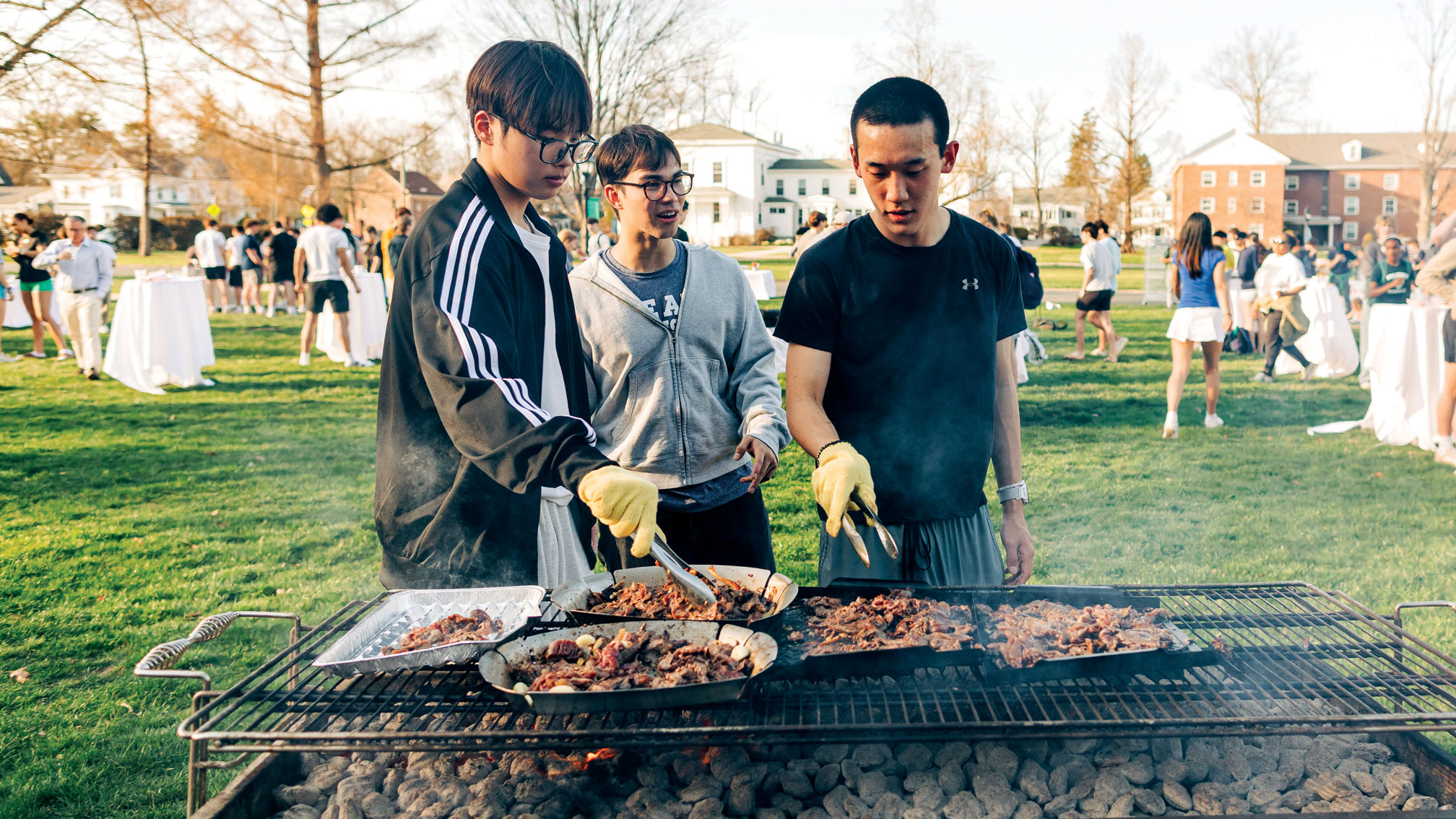
Over time, that spirit of these dinners has helped inspire larger student-led events on campus. Now in its fifth year, the Asian Night Market, for example, has become a favorite April tradition, when students (with help from SAGE Dining and Facilities Management) prepare and share foods from across Asia with the broader school community. The Lunar New Year Assembly has also become a highlight of the school year, featuring performances, cultural traditions, and student voices celebrating the start of a new year.
In each case, Choo says, the ideas come from the students. “The secret ingredient,” he says, “is letting the kids have ownership.” And when they feel the buy-in from a supportive faculty member like Choo, the results are secondary to the experience. Because as Choo says, even when a recipe goes wrong, “it’s just awesome.”
CELEBRATING ASIAN STUDENT CULTURE
Below are just a few ways Asian students are actively sharing and celebrating their cultures on campus. See photos of these and more online at flickr.com/willistonnorthampton.
ASIAN NIGHT MARKET
Now in its fifth year, the Asian Night Market fills the Academic Quad with the sights, sounds, and smells of student cultures from around the globe. On a sunny evening this April, the event featured outdoor grills, music in the air, and dishes from Asia and beyond. “This is such a fun activity because Asian students cooperate with each other to provide delicious food and expand everyone’s cultures,” says Japanese student Yuri Taniguchi ’27.
COMMUNITY CONNECTIONS FAIR
A favorite part of April’s Why Not Speak Day, the Community Connections Fair provides students an opportunity to set up tables on the Academic Quad, showcasing something important or interesting about their culture. For the second year now, Blue Meyerson ’26 has cooked and served kimbap, a Korean dish of cooked rice and various fillings rolled in dried seaweed and sliced into bite-sized pieces. Says Meyerson, “It’s one of the events I look forward to most each year because it allows me to share my Korean culture, which I’m very proud of. I especially enjoy seeing people try kimbap, sometimes for the very first time, and genuinely enjoy a food that represents such an important part of Korean culture.”
VIET VIBES
With the support of Asian Alliance advisor, Ken Choo, juniors Kaylee Le and Tracie Ngo started the Viet Vibes club, which Ngo says aims to “give more people the chance to discover Vietnamese food and culture.” Le and Ngo are grateful for Choo’s support of club activities and their own experience of helping to plan larger events. At their Sunday dinners, Le’s goal is to “provide a warm and welcoming space where everyone can explore traditional and modern Vietnamese dishes, share stories, and connect through having food together and cooking.”