
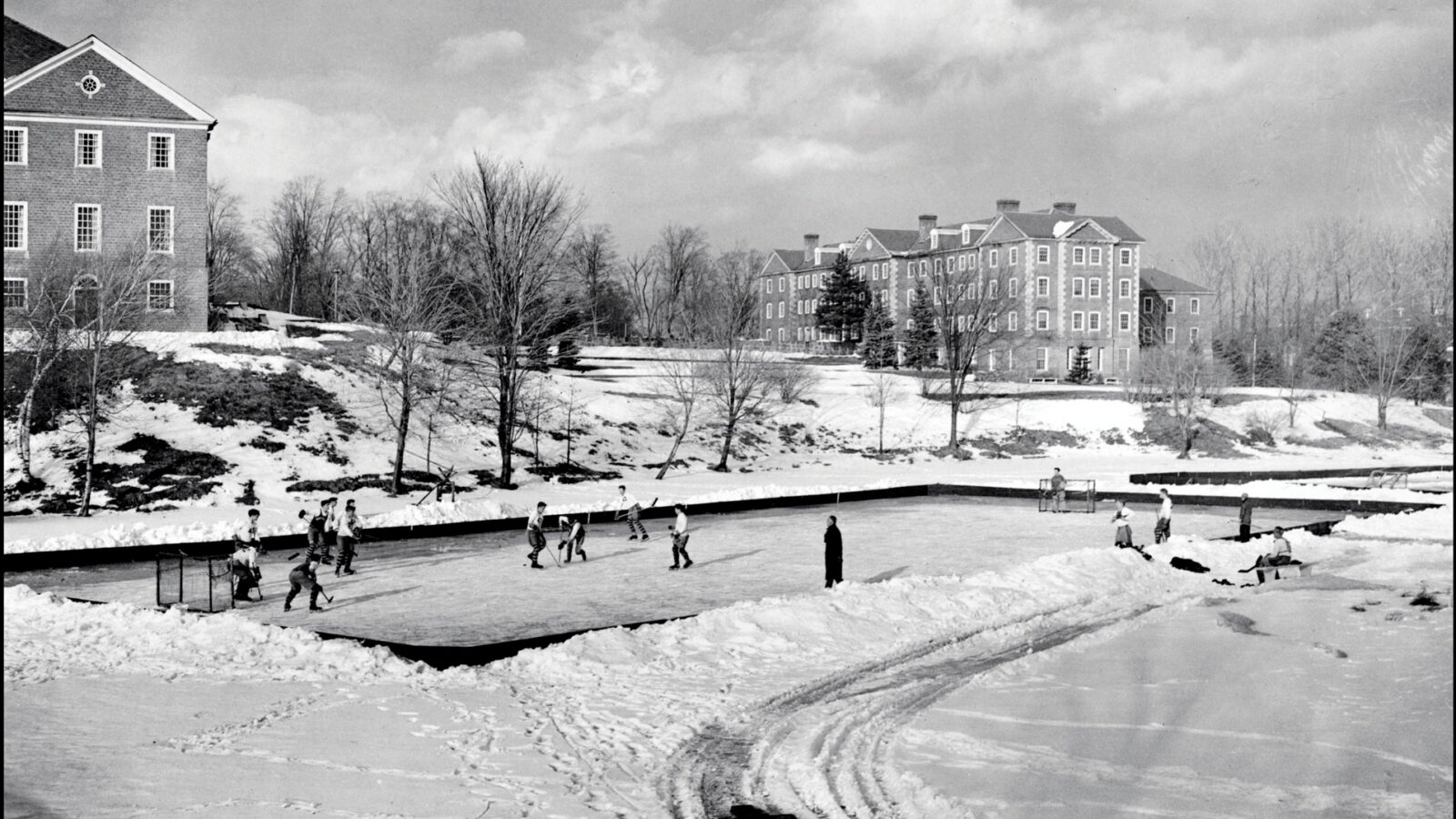
In the winter of 1965-66—my senior year—something truly extraordinary happened at Williston Academy: Headmaster Phillips Stevens declared two snow days in one year. Why I remember such a detail is easily answered: Snow days were an unexpected relief from the radiator-hissing humdrum classrooms and the tests, quizzes, and papers that we boys nervously anticipated. Here was an extra day. A reprieve. An answer to prayers, which had been dashed on many other days when the snows swirled and we hoped, with all the fervor a schoolboy could muster, that the gods (well, Phil Stevens) would smile on us. And most days, those prayers went unanswered and we trudged off to class, tired and disappointed. Perhaps this is where any of our latent skepticism about the power of prayer originated.
A typical morning in those days went like this: You got up—to an alarm clock that you had to wind—and showered and shaved. Then you put on your trousers, tucked in a shirt, and pulled on your socks and loafers. Rope belts were big then, and it was a mark of pride if you had athletic tape wrapped snugly around the toe of your well-worn loafer. Don’t ask me why. Then you either wore a madras jacket or, as this was winter, a blue blazer. The last element to the ensemble was, of course, the tie, ideally striped with colors of your college of choice. But here’s the key: The tie was tied as you ran down the hall and descended the stairs (if you lived in Ford Hall, as I did that winter) and raced into the dining hall, where you tried to reach your assigned table just as you finished adjusting your tie under the watchful eye of the “master” (teacher, in today’s parlance), who stood at his watch post at one end of the table. You did this, in January or February, mindful of the snow drifting up outside and wishing it to be more generous and praying with several hundred other boys—and doubtless many of the faculty—that the “Pin,” or the Headmaster (don’t ask me how he acquired this nickname, I never knew), would, in his benevolence, see the wisdom of declaring a snow day.
Slightly out of breath after the race against the clock to get to your table by 7:30 a.m, you waited for the Chaplain to say a prayer, which was always too long. Then there was a thunderous rattle and scrape of chairs as boys took their seats—or, if it was your turn to serve the table, run off to the kitchen to pick up a food tray for your table. If you weren’t a server, you picked up your tumbler of orange juice and drank it in one gulp. That was the minimum: You had to eat something before you could ask permission to be excused (to return to your room and try to read the last pages of your homework or memorize the conjugation of a few German verbs: I sleep, you sleep, we sleep…). Some teachers required that you eat a piece of toast at least. In any case, if it were one of those days when the snows were mounting very quickly—and probably when there was some sense on high that we boys and our tired teachers were at the height of our collective winter fatigue—the Headmaster, still standing for a one-beat after the Chaplain’s morning prayer, would open his mouth and utter three simple words: “Boys. Snow day!”
The Headmaster, still standing for a one-beat after the Chaplain’s morning prayer, would open his mouth, in answer to all of our prayers, and utter three simple words: ‘Boys. Snow day!’”
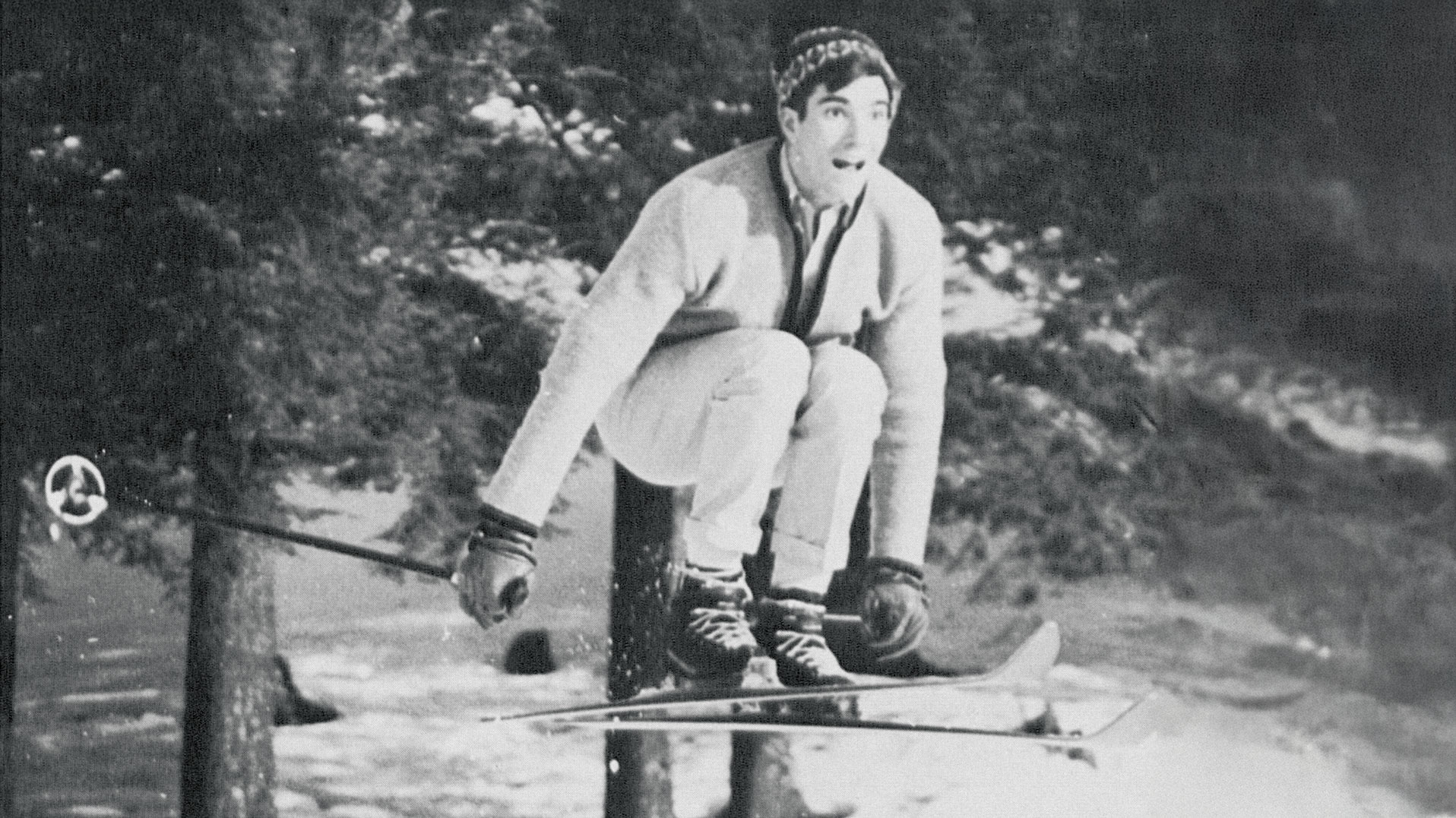
At that point all Bedlam broke loose (look it up: “Bedlam” refers to an infamous asylum in London) with boys chugging orange juice then bolting up the stairs to their rooms or out across the campus, joyfully flinging off our neckties. In an instant we had metamorphosed from (reasonably) well-dressed (semi) serious young scholars to a brigand band of wahoo-snow birds, most of us, as I recall, headed to the slopes over at nearby Mt. Tom. Since my home in South Hadley was but half an hour away, my call (remember, these were pay-phone times) was to my mother, who would drive over and pick up me and one or two buddies and drive us around the mountain to the ski slope, which, by late morning, was crowded with “Willies” joyfully riding the T-bar up the hill and bouncing around moguls on the way down. Maybe some guys made it to Boston for the day, but you couldn’t get far because you had to be back by dinnertime, when the reality of homework and delayed tests and quizzes once again loomed heavy.
Most years there was only one snow day—and that was that. After all, school started up after New Year’s and there were really only about seven or eight weeks when you might expect a good heavy snow. And if you thought about it, it was highly unlikely that the Pin would call a snow day the first week back after the Christmas break, so that really left only a five- or six-week window of time when a boy could reasonably expect a snow day. And if you imagined there was any chance of getting two snow days that year, well, logic dictated that the first snow day would have to come very early, say, mid to late January. And if there was to be a second snow day, then it could not follow close on the heels of the first: It had to come in late February, at least three to four weeks after the first one.
So it was, in the winter of 1966, Pin, to our utter amazement and sheer delight, called the historic second snow day of that winter. The gods had smiled on us twice. And perhaps for some of us our faith in prayer was restored.
For the statistically minded reader: it was not possible that there could ever have been a third snow day. The timing would be off because our winters were not long enough. And besides, this was New England, and a third free snow day would have seemed excessive, as though a Congregationalist had joined a Mardi Gras parade. We boys on that Easthampton campus resembled those Allied and German troops who emerged from their battlefield trenches one Christmas during World War I, and gathered in no-man’s-land to celebrate one day’s respite. And as with those young soldiers, many a cigarette, saved for such occasions, was shared on the slopes. For we were, briefly, alive again, and we savored every moment of it.
William Anthony is a retired professor and author. To read more about him, visit wanthonywriter.com