
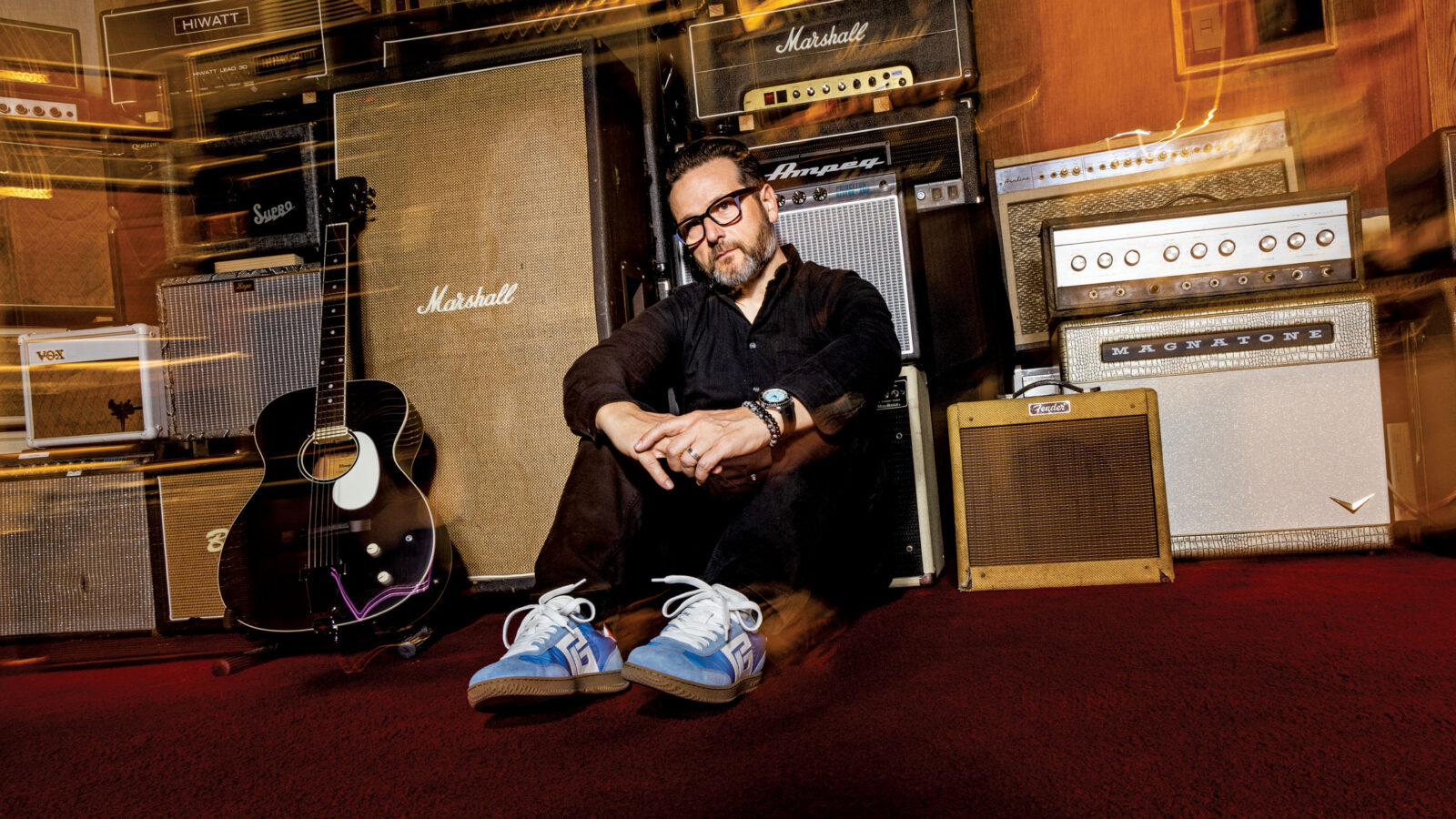
Fred Archambault ’95 is the creative force behind dozens of acclaimed rock and metal albums
Picture Fred Archambault ’95 at 12 years old in his bedroom in Southeast Texas, putting on his headphones, pressing play, and getting lost in the soundscape of a Metallica record. Visions of rock-star fame flashed in his mind—but over time, he became less interested in being the front man and more fascinated by how the songs were made.
“I’d read through all the liner notes to try to figure out what was going on and who was involved in making the records,” Archambault says. Pre-internet, liner notes were their own kind of textbook, introducing him to the mechanics of writing, recording, and producing albums.
“I started discovering things, like, where did Aerosmith come from?” he recalls. “Oh, from Led Zeppelin. Cool. Where did Led Zeppelin come from? Oh, from the Yardbirds. I did this deep dive and created my own history class.”
Forty years later, Archambault’s own name appears in the liner notes of countless albums. Wearing many hats—producer, mixer, songwriter, musician, and engineer—he has devoted his career to, he explains, “working with guitar-oriented heavy artists, gravitating toward a cinematic soundscape that helps support their story.”
Archambault is best known for producing four albums with Avenged Sevenfold, which have sold nearly 6 million copies. He has also worked with Atreyu, Deftones, Panic! at the Disco, and more. Based in Los Angeles, he produces most of his projects out of his home studio, Studio 5A.
In choosing musicians to work with, Archambault looks for one common thread: music that’s timeless.
“It can be a lyric that ages well, a sound that never goes out of fashion, or a sonic landscape of a record that keeps you coming back and finding different elements that reveal themselves,” he explains. “It’s like fashion—that sleek black dress will never go out of style. Tom Petty’s Damn the Torpedoes still slams and sounds fresh. The Cult’s Sonic Temple still hits hard. Some records never fall out of being impactful.”
His success, he says, was driven by equal parts ambition and “dumb luck.” At Williston, Archambault—already a gifted guitarist—received much of his musical education off campus.
“A great pop song in one line of a verse can distill all the emotions about love that you’re going through at the moment.”
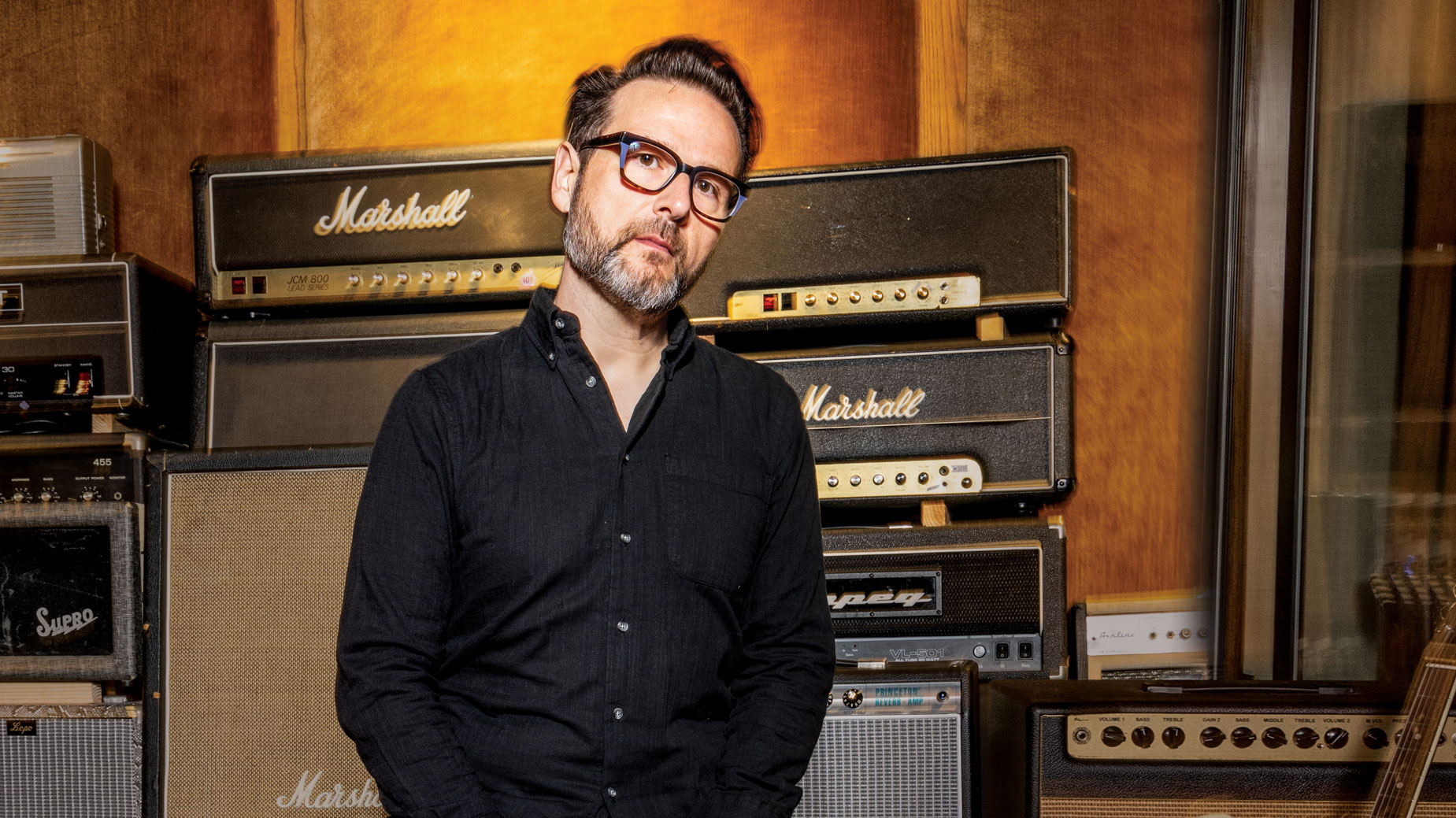
“Williston’s secret weapon was its location,” he says. “I was able to attend all-ages punk shows in Northampton and witness the New York and Boston punk/hard rock/metal movements at the time.”
After Williston, he attended the Berklee College of Music, where he was introduced to the recording studio. “I remember stepping into the studio for the first time and thinking, ‘This is it,’” he recalls. “Everything about it—the vibe, the technology.”
Eager to get his foot in the door, Archambault left Berklee in pursuit of an internship, calling every Boston studio listed in the Yellow Pages. Only one called him back: New Alliance, a small, scrappy studio underneath the Domino’s Pizza behind Fenway Park.
“That internship was pivotal to everything that’s happened in my life,” he says. “If I hadn’t said, ‘I’ll work for free for a couple months,’ I just wouldn’t be here.”
New Alliance had a surprise hit with the band Godsmack, grabbing national attention from MCA Records. Archambault had been the assistant engineer on the demo, and he rode that momentum to Los Angeles, where he briefly worked as runner for NRG Studios, before striking out on his own as a Pro Tools engineer, managing the digital workflows essential to modern production.
Before long, he was working with some of the hottest emerging metal bands on the scene. He credits Williston with helping him develop the time-management skills the job demands.
“My days are always packed, and I look back and ask, ‘Where did I learn how to manage my time?’ Oh yeah—I learned that from Williston, where my days were also always packed.”
Then came the opportunity that would define the next chapter of his career: Avenged Sevenfold. When the band’s demo landed on his desk, Archambault wasn’t sure what to make of it, but then he saw them play live at Ventura Theater. It clicked: “They’re an arena band that’s playing as a club band.”
He signed on, and the partnership helped propel the band to massive success. Archambault went on to produce one of the songs he’s most proud of, “A Little Piece of Heaven,” written by band member Jimmy “The Rev” Sullivan before his death.
Archambault envisioned the track with a full orchestra, and he negotiated with the label to bring in composer Danny Elfman. “When you listen to that song, it’s insane,” he says. “I love it. I’m so proud that I fought for it. I’m so proud that I saw the beauty of it.”
In fact, one of Archambault’s superpowers is adding production elements that are “buried, subliminal, and meant to be felt and not heard.” He explains, “Maybe upon repeated listens you can pick out these elements—these Easter eggs—in the mix.”
His work has extended far beyond studio albums. He completed production and mixing for NBC’s Last Call with Carson Daly, working with hundreds of artists, from Kendrick Lamar and Ed Sheeran to Weezer and M83. In that seven-year span, he estimates he mixed more than 1,500 songs for network broadcast.
In a full-circle moment, Archambault is now teaching at Berklee, having finished his degree during the pandemic. He hopes to pass along to his students the same awe for the record-making process that once captivated him—especially at a moment when humans are increasingly competing with technology to bring creative work into the world.
“I’m scared that we’re going to lose a great insight into something that meant the world to me, which was a great pop song that in one line of a verse can distill all the emotions about love that you’re going through at the moment,” he says. “What gets my feet to hit the ground every morning is inspiring the next generation of storytellers.”
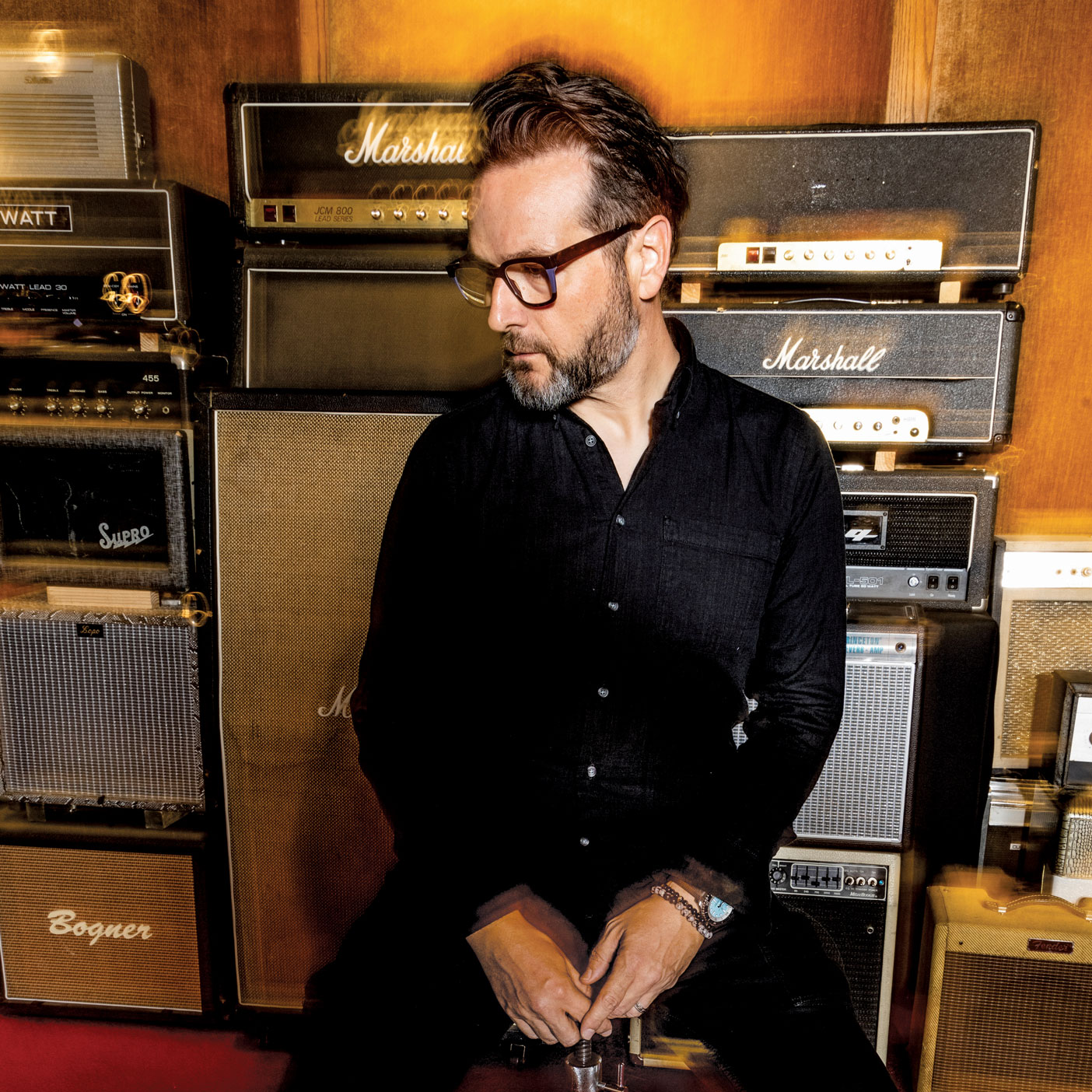
FRED’S LIST
We asked Fred Archambault to make a playlist of favorite recordings he’s worked on. But listener beware: You may find inspiration for your next (or first) tattoo!
Listen to the playlist here on Spotify.
“A Little Piece of Heaven” by Avenged Sevenfold
This song was written by Jimmy “The Rev” Sullivan while he was in rehab. It was all written in his head and memorized until he was able to record it with us in a cabin at Big Bear Lake, California. We brought in a couple of the guys from Oingo Boingo to complete the orchestrations.
“Pistolero” by Roll the Tanks
Mix Elvis Costello with The Kinks and you get Roll the Tanks. So proud of this tune; we channeled our inner “Wall of Sound” to bring this song to life.
“Afterlife” by Avenged Sevenfold
Epic bridge/guitar solo in this song. This is a great example of exploiting the bridge in a song to transport you to another place.
“Hurricane” by Panic! at the Disco
Brendon Urie is equal parts handsome gentleman and the most gifted performer.
“Cherry Waves” by Deftones
These drums were recorded in a massive ballroom mansion in Malibu where David Lynch filmed Lost Highway.
“Am I Wry? No” by Mew
Mew is a Danish alt rock band. This is a sleeper record that became a cult classic and won many critics’ awards.
“Medicine” by Orbit
Although I didn’t play on this recording, I am proud to play guitar in this band.
“Concubine” by Converge
Not for the faint of heart. It’s an iconic record and record cover that many people have tattooed on them, yet no one believes me when I tell them I worked on this record. It’s my lack of any tattoos, I guess.
“Unholy Confessions” by Avenged Sevenfold
This is the one that started it for me, my first song as a record producer that MTV played, back when MTV was a thing and played music videos.
“Visual Snow” by My Ticket Home
I’m proud of this record and what I accomplished vocally with Nick, their singer. There’s a sad-yet-beautiful story of why this record never received the promotion it deserved: The two brothers in the band scrapped their tour to be with their mother, who was battling cancer. Proof that blood is thicker than water.