
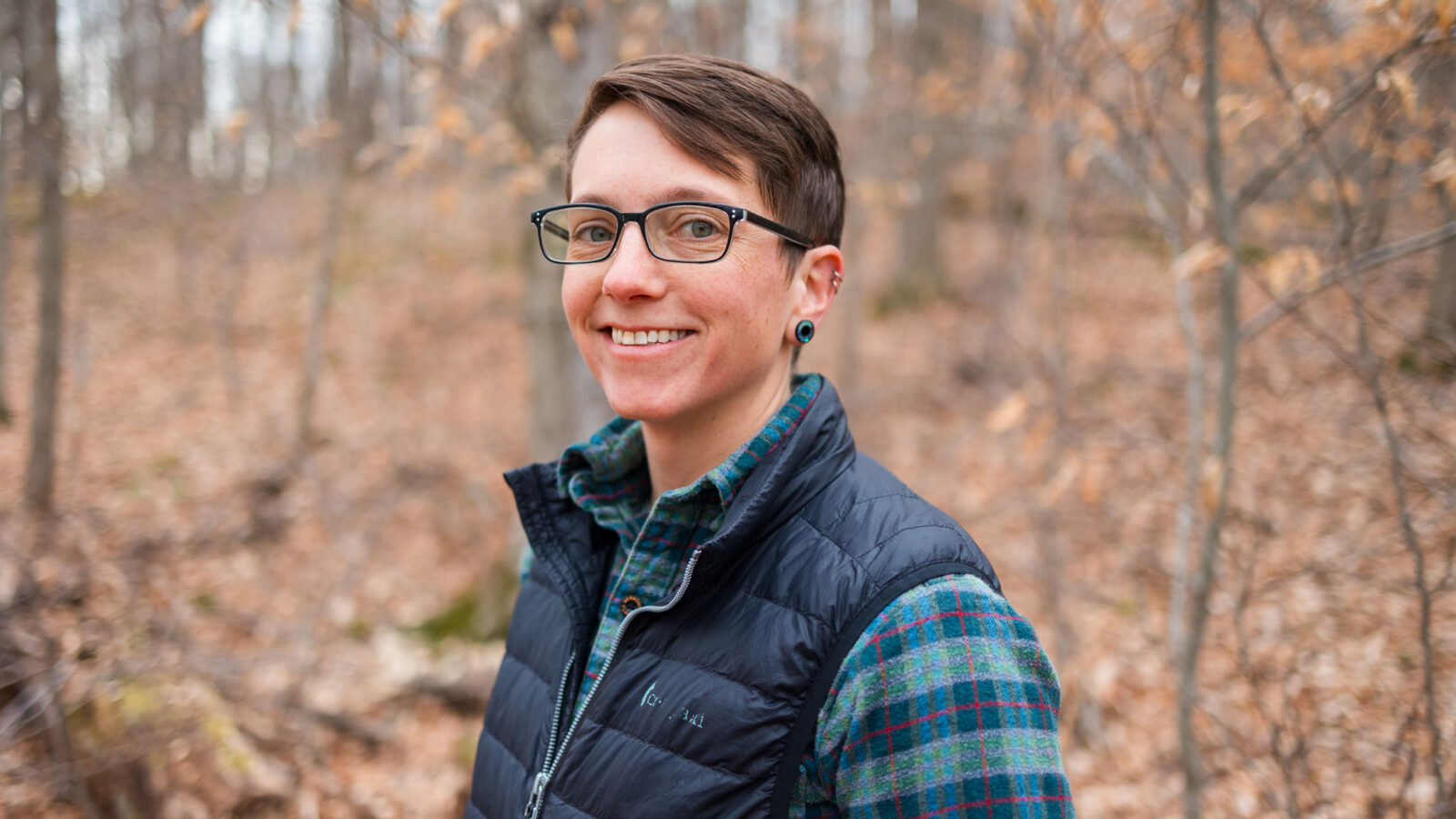
The process of better understanding who we are as people is often an adventure, and for Julia Stifler ’06, that’s exactly how it should be. In fact, as an adventure therapist in private practice in Bennington, Vermont, Stifler purposefully creates adventurous situations for her clients so they can gain insights into how they might respond to similarly challenging situations in their daily lives. “A lot of traditional therapy models involve sitting in an office face-to-face with a therapist and talking about problems that exist in your life,” explains Stifler, who earned a dual master’s degree in social work and outdoor education at the University of New Hampshire. “Adventure therapy says, ‘Let’s get off the couch and have an experience together,’ as a way to fast-track both the relationship-building between the therapist and the client, and also to experience some of the things that are coming up in your life, rather than just talking about them.”
To understand more about Stifler’s work, we swapped roles and asked her the questions.
What exactly would an adventure therapy session with you look like?
It’s really about assessing what the client needs that day, and framing an activity so that it’s in line with what they’re working on, or what they want to gain insight on, or skills in. Maybe decision-making is something that’s hard for you. So I might say, We’re going to go to a trail network where there are a lot of different trails, and you’re going to make decisions about where we go. I’m going to intentionally put you in the position of being the decision-maker, and leading us on this hike. And let’s see what comes up when you’re put in that position. Or I might take a person to a park where we walk up a really big hill. But since you’re someone who doesn’t think you’re doing a good enough job unless you’re doing it perfectly, and you can’t take a break from work, let’s see what happens if we intentionally take breaks along the way. Let’s see what it feels like to slow down.
So there’s some intentional challenge involved. Usually that’s designed to create an experience where you’re faced with the emotional reaction that you might typically have if, say, something is stressing you out. But we’re doing it in therapy, so we can actively work on it instead of just talking about it.
Is part of the adventure the act of being out in nature? How important is that?
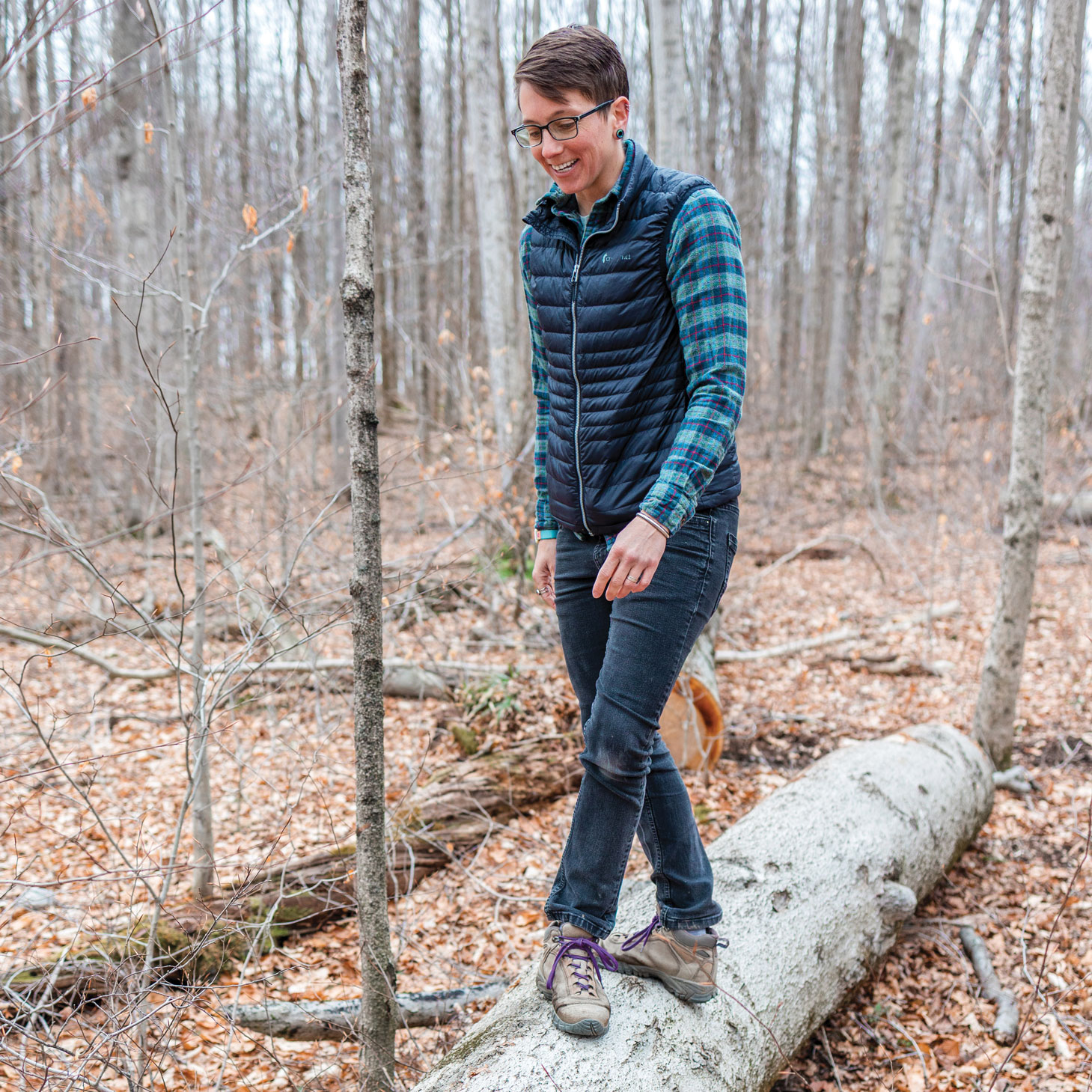
There’s a huge benefit to helping people spend more time outside. Being in nature, we know, has tons of mental and physical health benefits. There are plenty of outdoorsy people all throughout the state of Vermont, but there are also plenty of people who barely spend any time outside, especially in the colder months. I love getting out on the local trails with clients and then hearing from them later that they returned to those same trails for the purpose of continuing their connection with nature and using a mental health resource that I’ve shown them.
But adventure therapy doesn’t have to be outside. You can also do it in the office or on Zoom. You can get creative about how you think of the concept of adventure, the mindset that we’re going to challenge ourselves. We’re going to have some kind of novel experience that pushes us outside our comfort zones a little bit, so we learn something new about ourselves.
Tell me how you create adventures in your office.
It’s often a matter of getting off the couch and facilitating some kind of experience that is relevant to the client’s goals. I use mousetraps, for example, the classic wooden mousetraps with a bar and a spring that pinch you if you stick your finger in the wrong place. I do a lot of activities in my office using the mousetraps as a way to create a sense of danger. I teach people how to use them safely, and maybe we do an activity where we set a few mousetraps along the floor, and one of us is blindfolded, and the other guides us around the mousetraps safely, or guides us to disable the mousetrap safely with our eyes closed.
Then you can use that as a way to bring in a metaphor: What do you do when you’re confronted with an obstacle? Or, how do you keep yourself grounded when you start to feel worried that you’re in some kind of danger, there’s some kind of threat to you? It’s all about framing and facilitating an activity that then transfers to what’s actually going on in the person’s life outside of the therapy office, then offering them the opportunity to try new ways of responding to stress in the moment.
Who are your clients?
I work with individuals and families. My youngest client is 4, and my oldest is 65. I’ve been working more with adults in recent years, but middle school and high school aged clients have always been the majority, and the ones who are best suited to these types of interventions. They want an alternative to traditional talk therapy and they want to be outside, or they need a different way to connect with an adult and feel safer about working through trauma. Because I work with young people and take insurance, I almost always have a wait list for new clients. I’m on the doctors’ and schools’ referral lists, and people just find their way to me because I’m a therapist in a small town. It’s fun when people reach out specifically because they know I do adventure therapy and they want to try it.
How did your time at Williston prepare you for this work?
Being at Williston, and especially being involved in sports, gave me confidence in the
power of being part of a group and collaborating to solve problems. Also, the adults at Williston who believed in me, coached me, and helped me understand what I was capable of made a huge difference in my life. And now I think about how I can be one of those adults for all the young people with whom I work. I can be someone who instills hope for them, or helps them figure out who they are, what they want, and how to get there.