
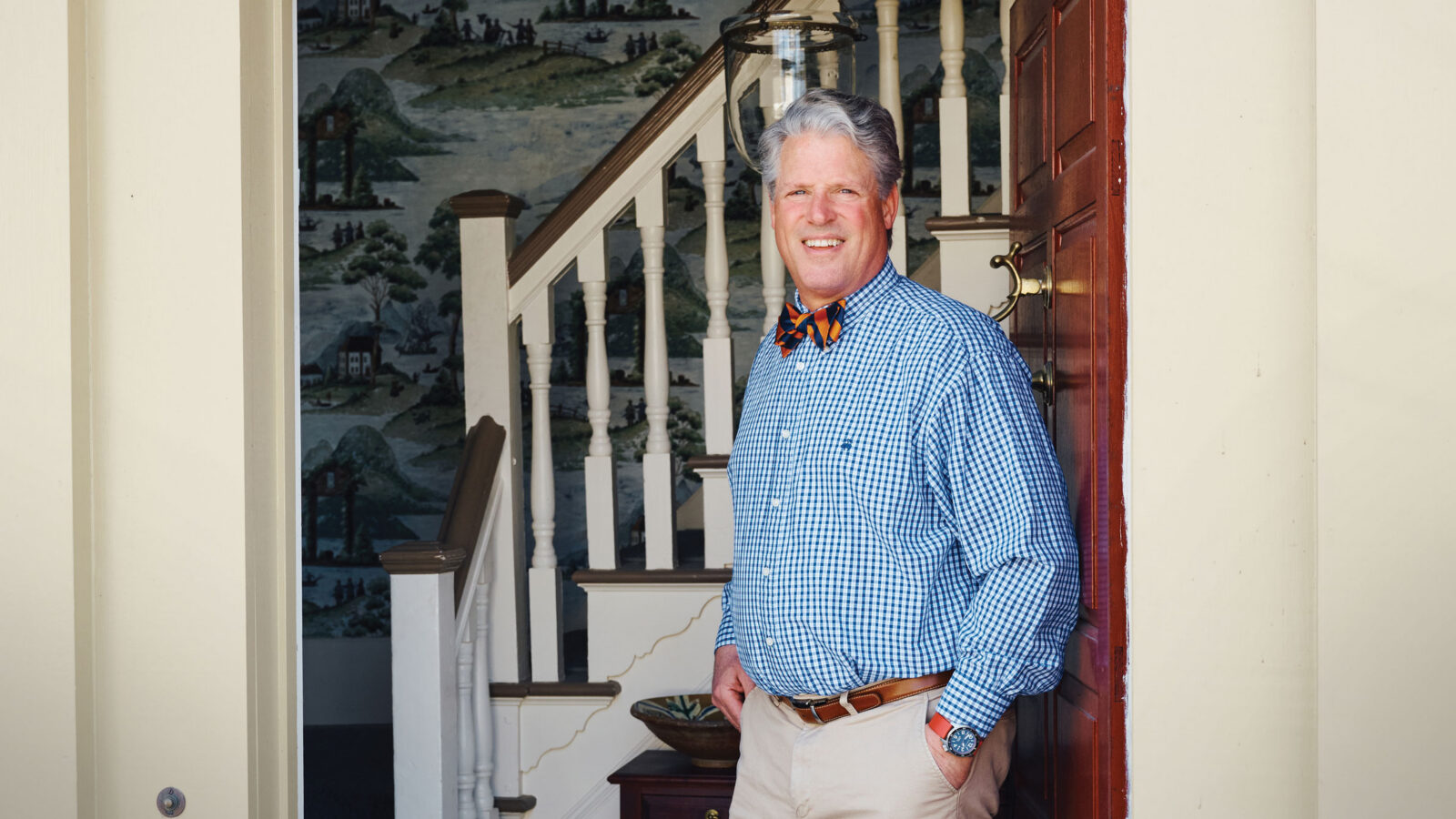
Benjamin Wilson ’87 lets history be his guide. “I guess my vocation is my avocation as well, and I’m lucky in that way.”
As director of the Division of Historical Resources, Ben Wilson ’87 makes sure that the history of his home state of New Hampshire, in all its fierce and rugged independence, is preserved and honored. His classmates at Williston won’t be surprised to hear that. They used to razz him about his meticulously organized dorm room in Ford Hall, which was decorated with old artworks he’d find in his parents’ closets. A late-19th-century Turkish kilim hung on one wall.
Wilson and his staff of nine have a head-spinning number of responsibilities, including acting as regulatory agents to ensure that the state’s precious historic resources remain safe as thousands of building projects get underway across the state each year. They also fund grants for restoration projects, manage highway historical markers, oversee the state register of historic places—the list goes on. “We’re about telling the truth—telling all the history we’re aware of,” says Wilson, from his Concord office. “Fortunately, people love history in New Hampshire. They love our story.”
Wilson’s own story has also been marked by a maverick spirit. He has worked in museums and historic preservation up and down the East Coast and received his master’s in building conservation in England. Threaded throughout has been a boundless curiosity about history and the mysteries he can plumb there. On the next pages, we ask him to tell us more.
What aspect of your work really scratches that itch for you as an historian?
My office employs the state archaeologist, and we’ve documented over 12,500 years of inhabitation in the state. We try to encourage folks, whenever they’re sticking a shovel in the ground, to make sure they document anything they find. We often discover unmarked graves related to both precontact Native American populations and early African Americans.
What’s it like being the director?
I deal a lot with funding and the legislature and all the politics. I try to take that on so my staff doesn’t have to—so they can focus on the work in front of them. It’s a heavy lift for them. They’re all brilliant people. This is their career. They’re not in it for the money. They’re just dedicated public servants who love the work that they do every day. And thank goodness for that.
A love of history is in your DNA, isn’t it?
Yeah. I was fortunate to grow up in a house with parents who were collectors. We lived in a Tudor Revival 1928 house in Concord that hadn’t really been touched. After church, we’d go to some town we hadn’t been to before and find the local dealer, and my parents would buy brown furniture, textiles, ceramics… My dad’s passion was clocks, 18th century, early 19th century. They also appreciated contemporary art, so we had a very eclectic house. We all played instruments and both my parents were voracious readers. My parents were real Renaissance people.
You went to the North Bennet Street School in Boston after college. How did that come about?
My parents had always said to choose something in life for work that you enjoy waking up to every morning, otherwise it’s not worth it. I’d always liked making things and using my hands, so I thought maybe that was something I could do that would make me happy. I got into the North Bennet Street School and there were, I think, only 12 of us in the class, so it was very intense, very intimate. We got to work with Robert Adam, who created a program in historic preservation through preservation carpentry. We learned how to restore or build a period house—18th, early 19th-century buildings—using solely hand tools, frame-up to finish. We also learned about architectural history, about all the social movements related to the fashions of different moldings and window sizes and fireplaces, and about masonry evolution, making plaster and period mortars. It was an incredible 24 months.
After working as a building preservationist in Charleston, South Carolina, you moved back to New Hampshire in 2005 with your wife, Lucy. You raised both your boys here as New Englanders. How did you end up living in the little town of Hopkinton, New Hampshire?
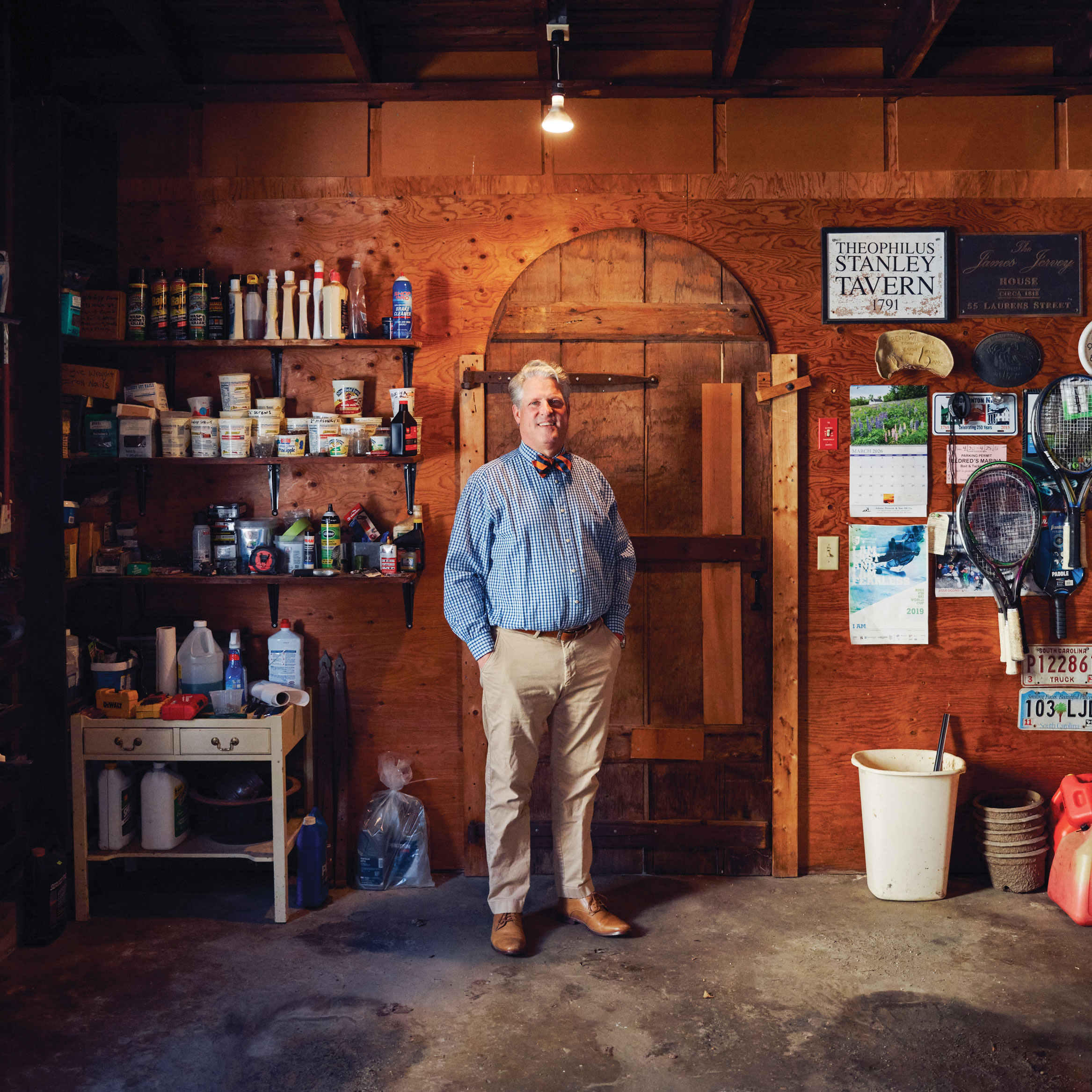
After 35 years in Concord, my parents moved to Hopkinton, a village with lots of wonderful 18th-century houses lining the main street. There was this one Georgian house, 1791, sitting next to the village store. It had been abandoned and the store owner wanted to buy it, tear it down, and put in a parking lot. So my dad made an offer on it, got it, and called me up and said, “I’ve got a project for you.” I started going back and forth from Charleston, trying to run a business there while putting a team together here to restore the building. It was purpose-built as a tavern. Over time, when walls were put up or changes were made, the former owners had literally cut around moldings and chair rails and sort of stuck stuff to paneling or sheetrock. So we were able to peel everything back. We picked 1805 as a date to try to hit with its interpretation. We ended up with this amazing house, this tavern, and that’s where Lucy and I live now. The store is still next door.
Can you tell us what Williston has meant to you?
It saved my life. I had a wonderful childhood in Concord back in the 1970s when they still had neighborhood schools. But after you got out of sixth grade, you went to the junior high, so every 10 little neighborhood schools would dump kids into this one big, horrible situation. For somebody whose wheels turned a little too fast and with puberty hitting, it was just a messy situation. I couldn’t thrive. I tried really hard. So I wanted to go away to school.
I looked at a lot of places. My mom and I showed up for my tour at Williston, and for some reason the admissions office was closed. Bob St. George happened to see us and explained there must have been a miscommunication about our appointment. He said, “How about this? I’m going to give you your tour of the school.” He dropped everything and took us around for, I don’t know, two hours, and then we went back to his office and had a conversation. It was amazing.
My experience as a student at Williston—the people I met, the acceptance of whatever anybody wanted to do—saved me. It was a wonderful place where faculty and students could have real conversations and relationships. I feel like it’s still that way today. I hope it is.