
After more than two decades at Williston, arts educator Natania Hume is reconceiving her work, her materials, and what it means to make a lasting impact
Visual and Performing Arts teacher Natania Hume, who is retiring from teaching this spring, has a highly personal method for tracking her many years at Williston. “I started when my daughter was nine months old—so in 2004,” she recalls. “That means I’ve been here for 22 years.”
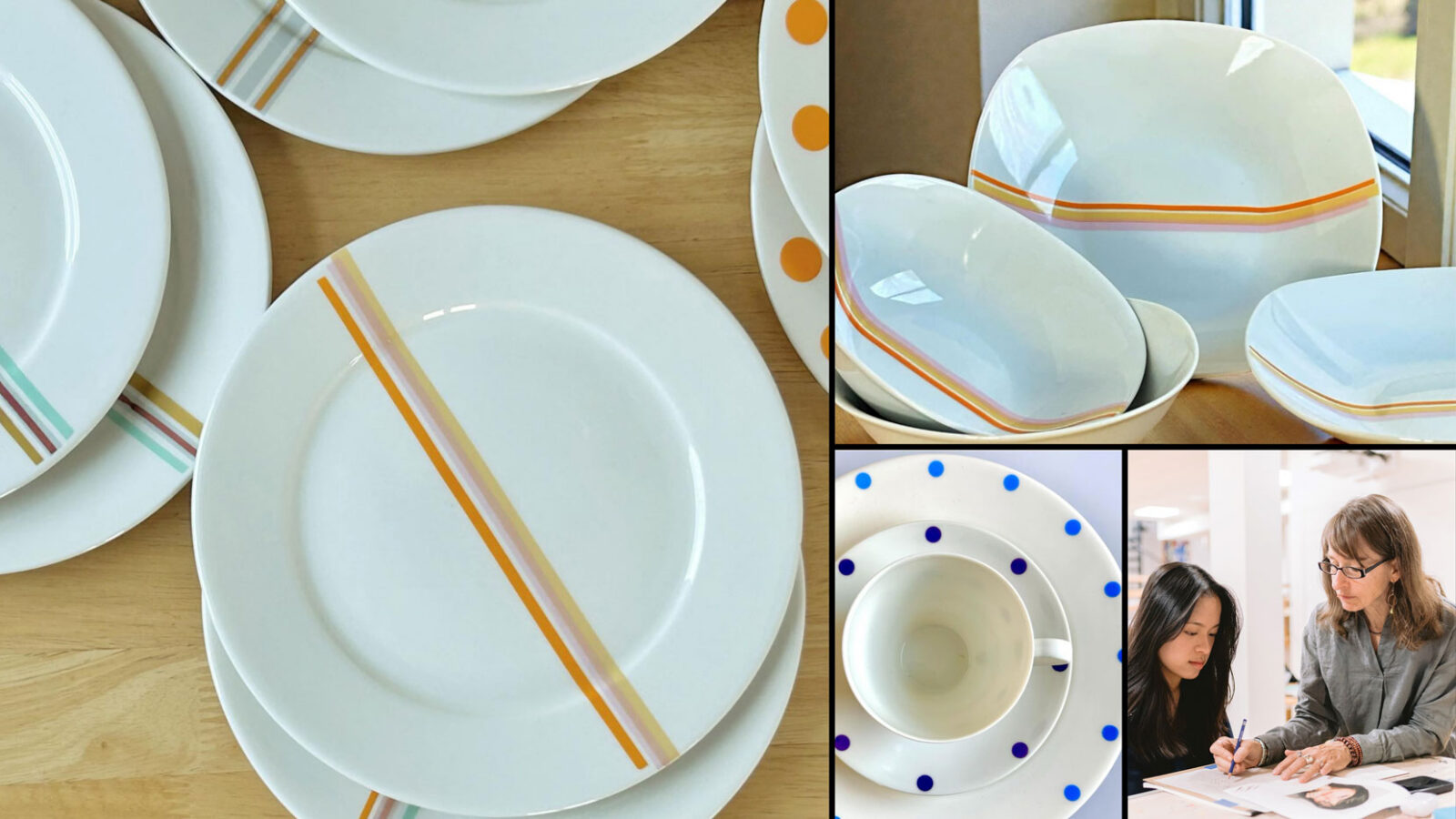
For the majority of that time, Hume has served as arts department head, while also curating the Grubbs Gallery and managing the Grum Project for visiting artists. And when she is not teaching and inspiring Williston students, she is pursuing her own career as a studio potter, specializing most recently in embellishing manufactured dishware with colorful overglaze designs, an artisanal approach that aligns with the philosophy of her longtime handmade ceramics business, Slow Studio.
Hume has now begun an undertaking that is a departure from art, though it had its genesis in her classroom. She has returned to school to earn her master’s in social work (adding to her degrees in fine arts and art education), so she can work with adolescents, whose emotional and mental health needs were often more than she could address in art classes. “The art room can be a place where a lot of kids take refuge or want to express what’s going on in their lives through art,” she explains. “I decided I wanted to become a therapist to work with adolescents in a deeper, more specific and focused way. Because there’s only so much you can do when you’re just grading their art.”
Hume plans to relocate to West Stockbridge, Massachusetts, where she’ll continue her degree coursework and begin an internship in the mental health field. She’ll also continue to develop her overglazing technique, with plans to eventually sell the pieces to local stores or through interior designers. The work involves cutting colorful shapes and designs from glaze sheets called “waterslides,” which she then fuses to repurposed plates, cups, and other white dishware in a low-temperature firing.
The process produces something new while also rescuing something old, a benefit with particular appeal to Hume. “There’s just so much handmade ceramics now that, environmentally, maybe we need to deal with what we have and not always be making and buying new stuff,” she suggests. “Not that there’s anything wrong with making handmade ceramics. I’m just interested in rescuing them, making them more appealing and giving them a second life.”
A concept that Hume is now applying to her career, as well.